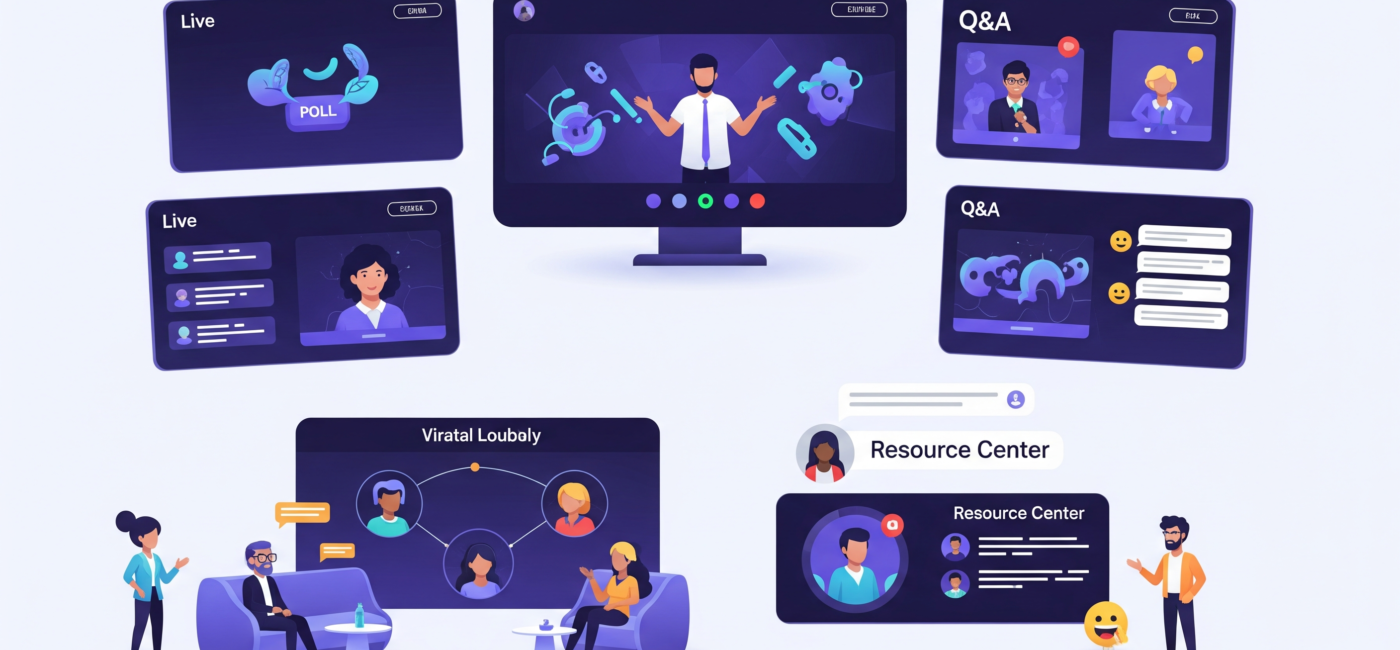
Virtual event engagement tools are digital solutions designed to increase audience interaction, participation, and retention during online and hybrid events. These tools enable real-time engagement through features such as live polls, Q&A sessions, networking rooms, gamification, social media walls, and analytics—turning passive attendees into active participants. In 2025, engagement tools for virtual events are no longer optional; they are essential for improving event ROI, attendee satisfaction, and overall event success.
- What Are Virtual Event Engagement Tools?
- Why Virtual Event Engagement Is Challenging (And How Tools Solve It)
- Engagement Metrics That Matter
- Best Virtual Event Engagement Tools in 2025
- How to Choose the Right Virtual Event Engagement Tool
- Virtual Event Engagement Tools by Event Type
- Frequently Asked Questions About Virtual Event Engagement Tools
- What are virtual event engagement tools?
- What are the best virtual event engagement tools in 2025?
- How do engagement tools improve virtual event participation?
- Are virtual event engagement tools useful for hybrid events?
- What features should I look for in a virtual event engagement tool?
- Do virtual event engagement tools increase event ROI?
- Expert Insights: Why Engagement Tools Matter More Than Ever
- Real-World Use Case: Virtual Conference Engagement Strategy
What Are Virtual Event Engagement Tools?
Virtual event engagement tools are software platforms or integrated features that help event organizers facilitate interaction before, during, and after virtual events. Unlike traditional webinar tools that focus mainly on broadcasting content, engagement tools focus on two-way participation.
These tools are commonly used across:
- Virtual conferences
- Webinars & workshop
- Hybrid events
- Virtual trade shows
- Corporate town halls
At their core, virtual event engagement tools bridge the gap created by physical distance by replicating—and often enhancing—real-world interactions.
Why Engagement Matters in Virtual & Hybrid Events
One of the biggest challenges of virtual events is attention loss. Studies consistently show that virtual attendees are more likely to multitask, drop off mid-session, or disengage if the experience feels one-sided.
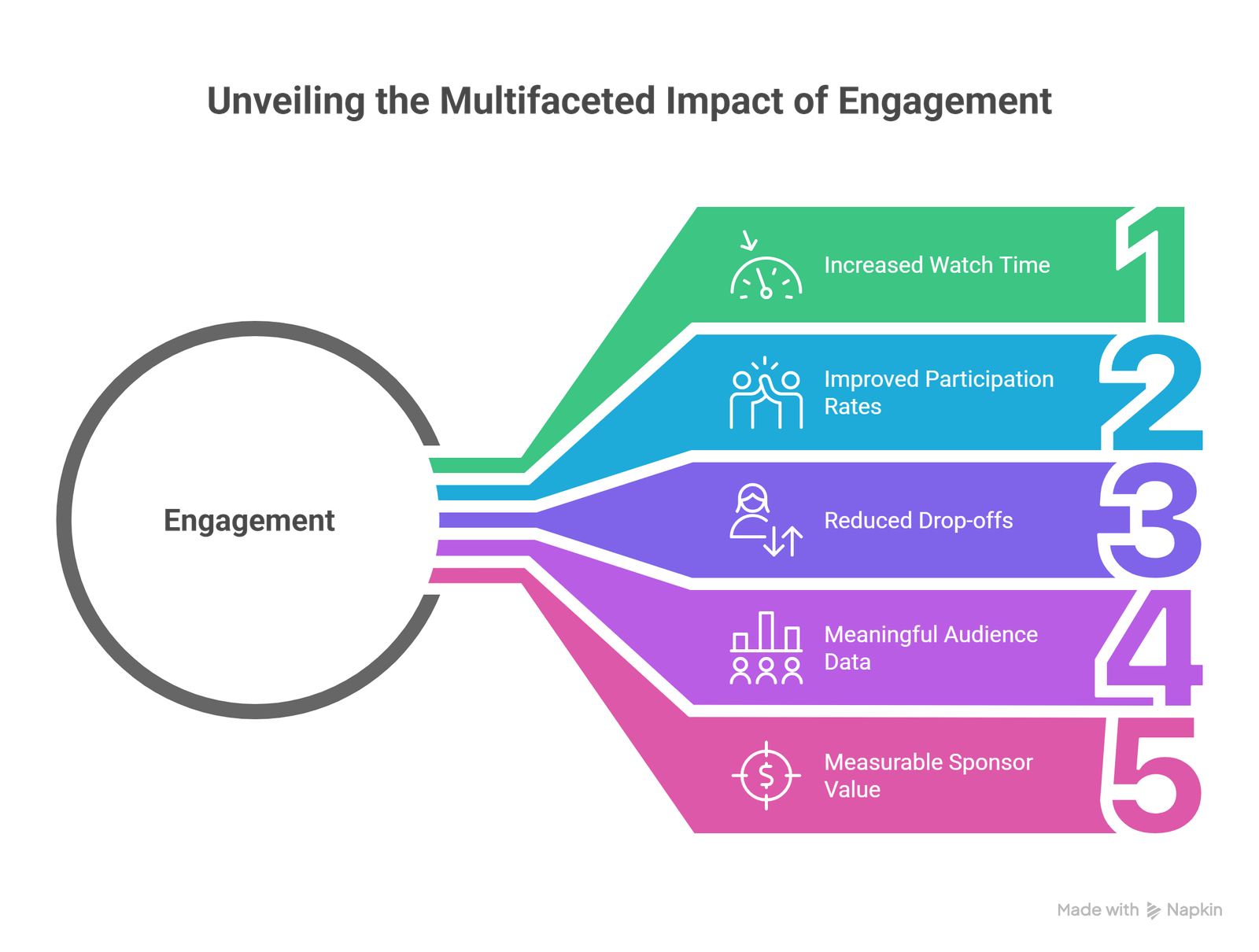
Effective engagement tools help:
- Increase average session watch time
- Improve participation rates
- Reduce attendee drop-offs
- Generate meaningful audience data
- Deliver measurable value to sponsors
In short, engagement directly impacts event success metrics—from attendance to conversions.
How Virtual Engagement Tools Impact ROI
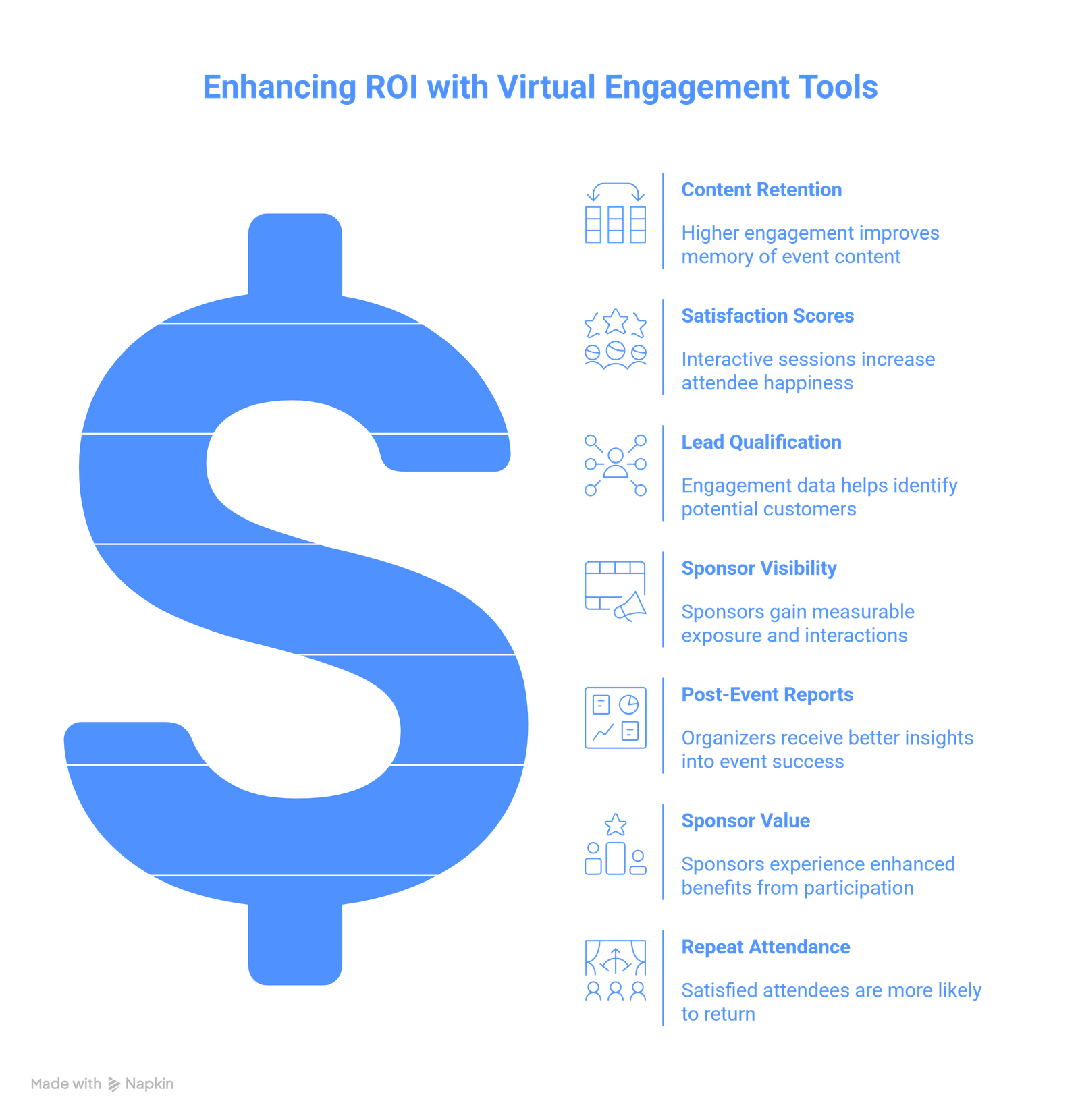
Virtual event engagement tools contribute to ROI in multiple ways:
- Higher engagement leads to better content retention
- Interactive sessions improve satisfaction scores
- Engagement data supports lead qualification
- Sponsors gain measurable visibility and interactions
For organizers, this translates into better post-event reports, stronger sponsor value, and repeat attendance.
Why Virtual Event Engagement Is Challenging (And How Tools Solve It)
Common Virtual Event Engagement Challenges
Even well-planned virtual events struggle with:
- Screen fatigue
- Passive viewing behavior
- Limited networking opportunities
- One-way presentations
- Lack of real-time feedback
Without the energy of a physical venue, virtual audiences require intentional engagement design.
How Virtual Event Engagement Tools Solve These Problems
Engagement tools are designed to break passive consumption by introducing:
- Real-time interaction moments
- Short feedback loops
- Social participation triggers
- Gamified incentives
For example, live polls every 10–15 minutes re-engage attention, while networking lounges replicate hallway conversations that are missing in virtual formats.
Engagement Metrics That Matter
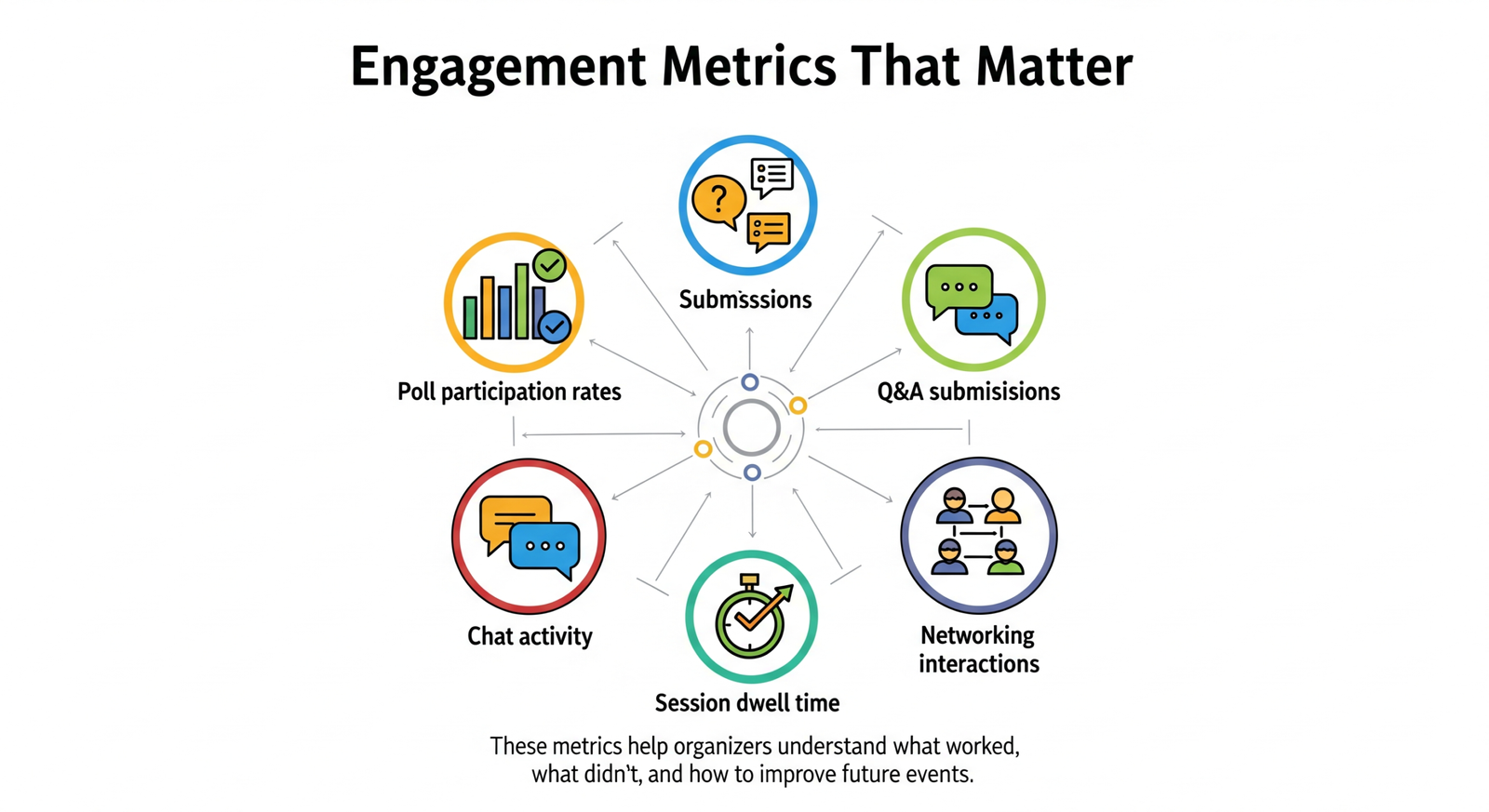
Modern engagement tools track meaningful data such as:
- Poll participation rates
- Q&A submissions
- Chat activity
- Session dwell time
- Networking interactions
These metrics help organizers understand what worked, what didn’t, and how to improve future events.
Best Virtual Event Engagement Tools in 2025
Choosing the right virtual event engagement tools depends on your event goals, audience size, and interaction level. Below is a curated list of widely used engagement tools and platforms, categorized by their core strengths and real-world use cases.
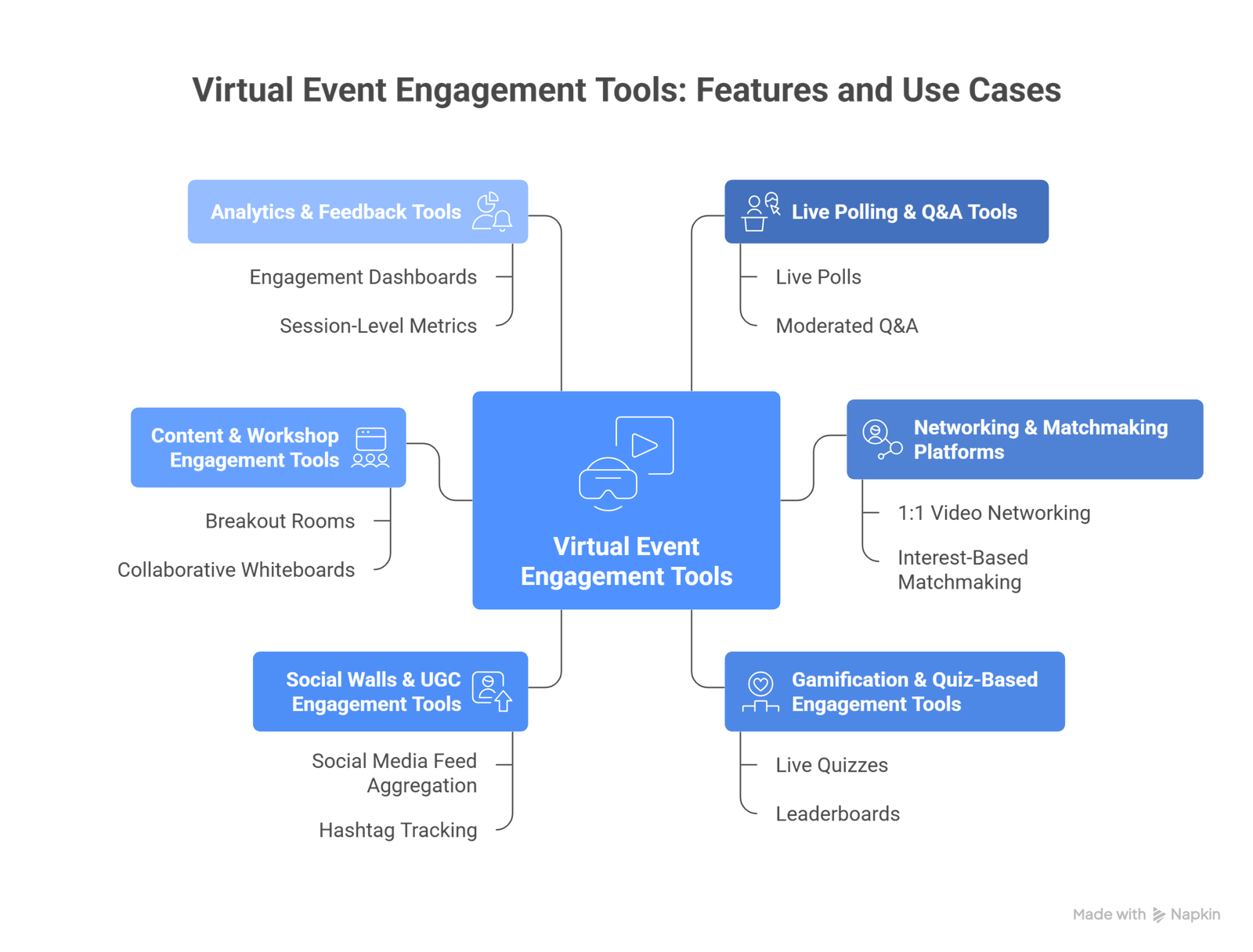
Live Polling & Q&A Tools
These tools are designed to encourage real-time audience participation during sessions.
Best for: Webinars, panels, keynotes
Core features:
- Live polls and surveys
- Moderated Q&A
- Emoji reactions
- Audience sentiment tracking
Why they work:
Polling and Q&A tools break one-way communication and allow speakers to adapt content based on audience feedback, significantly improving engagement and attention span.
Networking & Matchmaking Platforms
Networking-focused tools replicate in-person conversations in a virtual environment.
Best for: Conferences, summits, trade shows
Core features:
- 1:1 video networking
- Group discussion tables
- Interest-based matchmaking
- Scheduled networking slots
Why they work:
These tools create structured yet organic networking opportunities, helping attendees make meaningful connections rather than random interactions.
Gamification & Quiz-Based Engagement Tools
Gamification tools use competition and rewards to boost participation.
Best for: Multi-day events, internal events, community-driven programs
Core features:
- Live quizzes and trivia
- Leaderboards and scoring
- Badges and rewards
- Engagement challenges
Why they work:
Gamification triggers motivation and curiosity, keeping attendees active throughout the event instead of passively consuming content.
Social Walls & UGC Engagement Tools
Social engagement tools display live user-generated content from attendees.
Best for: Brand events, hybrid events, community launches
Core features:
- Social media aggregation
- Hashtag tracking
- Live content moderation
- On-screen audience posts
Why they work:
Social walls give attendees visibility and recognition, encouraging them to share content and participate more actively during the event.
Content & Workshop Engagement Tools
These tools enhance session interactivity.
Best for: Training sessions, workshops, education-focused events
Core features:
- Breakout rooms
- Collaborative whiteboards
- Interactive presentations
- Live co-creation
Why they work:
They transform attendees from viewers into contributors, increasing learning outcomes and satisfaction.
Analytics & Feedback Tools
Analytics-focused tools help organizers measure engagement success.
Best for: Post-event analysis, sponsor reporting, ROI tracking
Core features:
- Engagement dashboards
- Session-level metrics
- Interaction heatmaps
- Post-event analytics and surveys
Why they work:
Data-driven insights help organizers prove value to stakeholders and optimize future events.
How to Choose the Right Virtual Event Engagement Tool
Not every engagement tool fits every event. Use the following criteria to select the right solution.
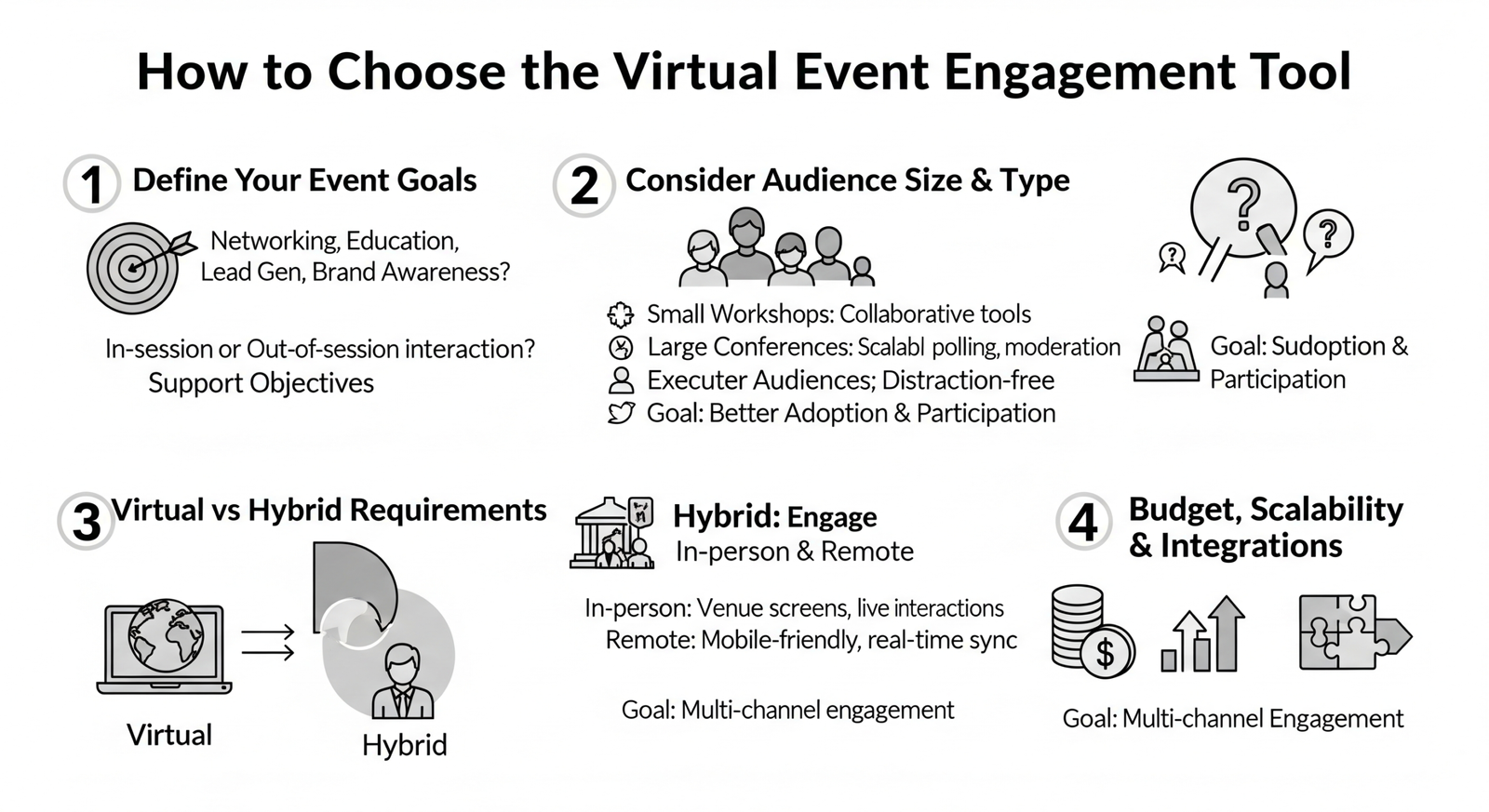
Define Your Event Goals
Ask yourself:
- Is the goal networking, education, lead generation, or brand awareness?
- Do you need interaction during sessions or outside them?
Your engagement tools should directly support these objectives.
Consider Audience Size & Type
- Small workshops benefit from collaborative tools
- Large conferences need scalable polling and moderation
- Executive audiences prefer structured, distraction-free engagement
Understanding your audience ensures better adoption and participation.
Virtual vs Hybrid Requirements
Hybrid events require tools that engage both:
- In-person audiences (venue screens, live interactions)
- Remote attendees (mobile-friendly interfaces, real-time sync)
Ensure the tool supports multi-channel engagement.
Budget, Scalability & Integrations
Evaluate:
- Pricing models (per event, per attendee, subscription)
- Integration with event platforms, CRMs, or marketing tools
- Scalability for growing events
A flexible tool prevents limitations as your events evolve.
Virtual Event Engagement Tools by Event Type
Corporate Events & Town Halls
- Live polls
- Anonymous Q&A
- Feedback surveys
Ideal for encouraging participation without pressure.
Conferences & Summits
- Networking lounges
- Gamification
- Social walls
Virtual conference engagement tools keep energy high across multiple sessions and days.
Webinars & Workshops
- Polling
- Breakout rooms
- Interactive whiteboards
Perfect for education-driven engagement.
Virtual Trade Shows & Expos
- Booth engagement tools
- Lead capture forms
- Chat and scheduling tools
They replicate real-world booth interactions digitally.
Frequently Asked Questions About Virtual Event Engagement Tools
What are virtual event engagement tools?
Virtual event engagement tools are digital solutions that help increase audience interaction during online and hybrid events. They enable features such as live polls, Q&A, networking rooms, gamification, social content displays, and analytics to keep attendees actively involved rather than passively watching.
What are the best virtual event engagement tools in 2025?
The best tools depend on your event goals, but top-performing categories include:
- Live polling and Q&A tools
- Networking and matchmaking platforms
- Gamification and quiz tools
- Social walls and UGC tools
- Engagement analytics and feedback platforms
A combination of these tools typically delivers the highest engagement.
How do engagement tools improve virtual event participation?
Engagement tools improve participation by:
- Creating real-time interaction moments
- Encouraging two-way communication
- Reducing screen fatigue through activities
- Giving attendees visibility and recognition
Events that use structured engagement tools consistently report higher session retention and attendee satisfaction.
Are virtual event engagement tools useful for hybrid events?
Yes. Engagement tools are especially valuable for hybrid events because they help create equal participation opportunities for both in-person and remote attendees. Features like live polls, social walls, and mobile-based interactions bridge the gap between physical and virtual audiences.
What features should I look for in a virtual event engagement tool?
Key features to prioritize include:
- Ease of use for attendees
- Real-time interaction (polls, Q&A, chat)
- Networking and matchmaking options
- Analytics and reporting
- Content moderation and data privacy
The right feature mix depends on your audience size, event format, and engagement goals.
Do virtual event engagement tools increase event ROI?
Yes. By increasing participation, collecting engagement data, and improving sponsor visibility, these tools help organizers:
- Generate higher-quality leads
- Deliver measurable value to sponsors
- Improve repeat attendance
- Optimize future events using insights
Expert Insights: Why Engagement Tools Matter More Than Ever
Event professionals increasingly agree that engagement is the defining factor of successful virtual events. As audiences become more selective with their time, events that fail to create interaction struggle to retain attention.
From hands-on experience across virtual conferences, webinars, and hybrid events, engagement tools consistently:
- Increase average session watch time
- Improve post-event feedback scores
- Strengthen community-building efforts
The most successful events are no longer content-heavy—they are experience-driven.
Real-World Use Case: Virtual Conference Engagement Strategy
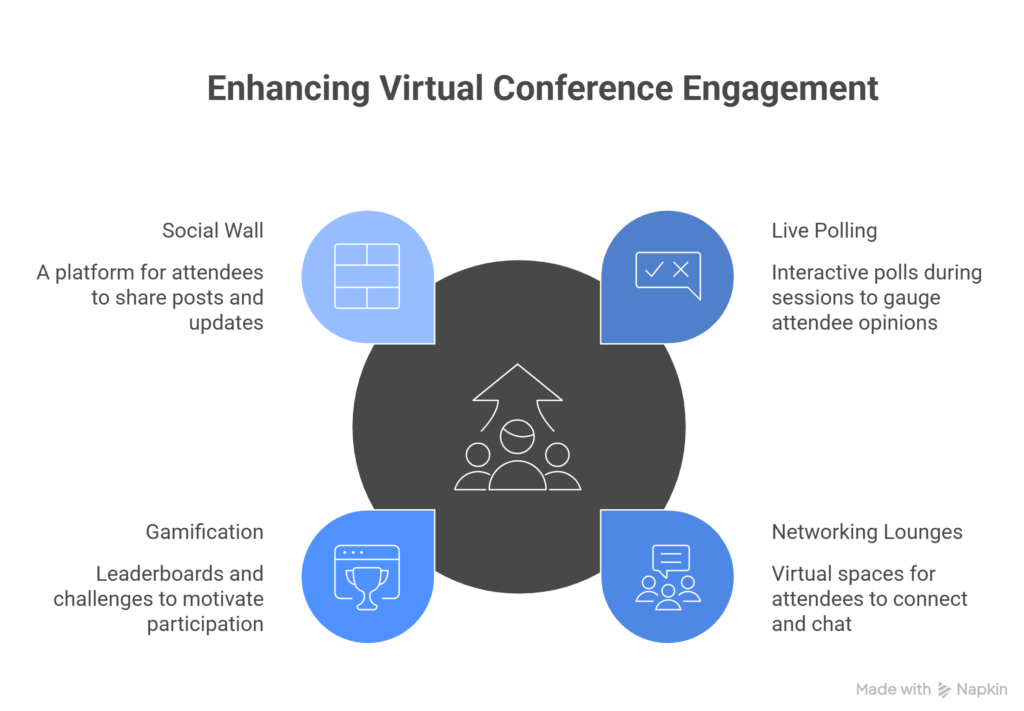
Event type: Multi-day virtual conference
Challenge: Low attendee interaction and early session drop-offs
Engagement tools used:
- Live polling during sessions
- Networking lounges between sessions
- Gamification with leaderboards
- Social wall displaying attendee posts
Results:
- Increased session participation
- Higher average dwell time
- More networking interactions
- Stronger sponsor visibility
This demonstrates how combining multiple engagement tools creates a cohesive and interactive event experience.