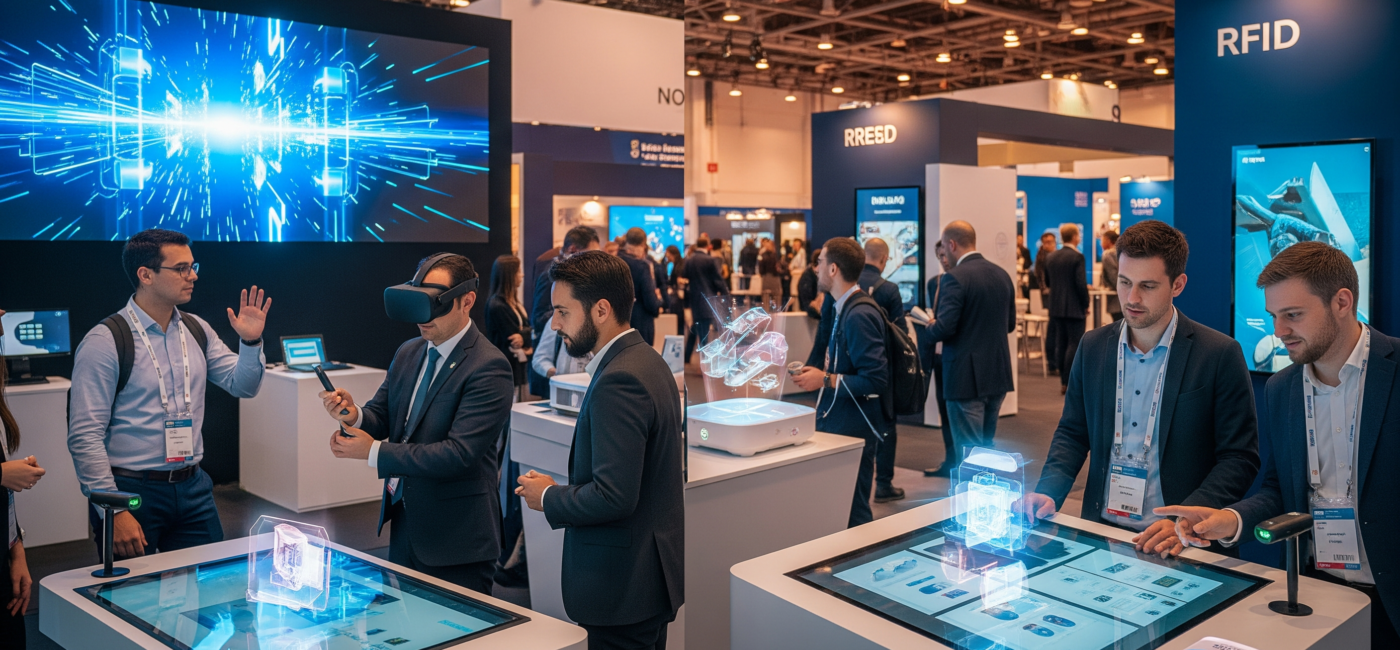
It’s 2026 and not using technology in events might become the biggest mistake for EventProfs. Event technology for exhibitors increase engagement, capture qualified leads, personalize interactions, and measure ROI across physical, virtual, and hybrid events using data-driven tools.
- Event Technology for Exhibitors – What is it & Why its Important
- How Exhibitor Technology Differs from Organizer Event Technology
- Why Event Technology Is Critical for Modern Exhibitors
- Core Types of Event Technology for Exhibitors
- How Event Technology Improves Exhibitor ROI
- Event Technology for Physical, Virtual & Hybrid Exhibitions
- How to Choose the Right Event Technology for Exhibitors
- Best Practices for Using Event Technology at Exhibitions
- Common Mistakes Exhibitors Make with Event Technology
- Real-World Examples & Case Studies
- Expert Insights: What Experienced Exhibitors Know
- Frequently Asked Questions About Event Technology for Exhibitors
- Ready to Maximize Your Exhibitor ROI?
Event Technology for Exhibitors – What is it & Why its Important
Event technology for exhibitors refers to the digital tools, platforms, and software solutions that help exhibitors attract visitors, engage attendees, capture leads, and measure ROI at exhibitions, trade shows, conferences, and hybrid events.
Unlike organizer-focused event tech (ticketing, registration, scheduling), role of technology in event management for exhibitors is to answer one core business question:
“How many meaningful leads did we generate, and what business impact did this event deliver?”
Modern exhibitor technology combines lead capture systems, interactive booth tools, analytics dashboards, mobile integrations, and post-event reporting to turn booth interactions into measurable outcomes.
How Exhibitor Technology Differs from Organizer Event Technology
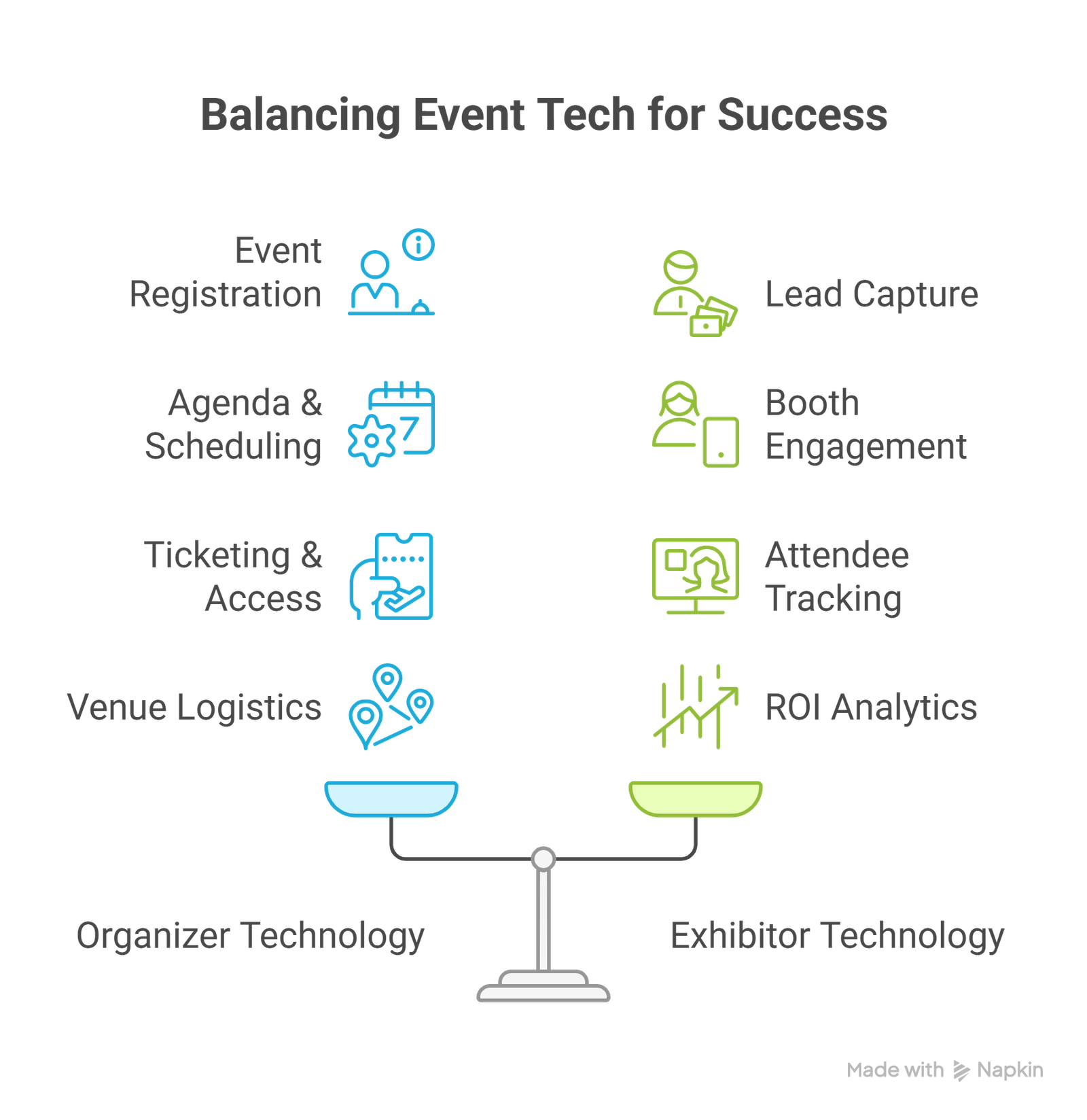
While both fall under the “event tech” umbrella, their goals and use cases are fundamentally different.
| Organizer Technology | Exhibitor Technology |
|---|---|
| Event registration | Lead capture & retrieval |
| Agenda & scheduling | Booth engagement tools |
| Ticketing & access control | Attendee interaction tracking |
| Venue logistics | ROI & performance analytics |
For exhibitors, success isn’t footfall alone—it’s qualified conversations, data ownership, and post-event conversion.
Why Event Technology Is Critical for Modern Exhibitors
Exhibiting without technology in 2026 is like running paid ads without analytics. You might get attention—but you’ll never know what worked.
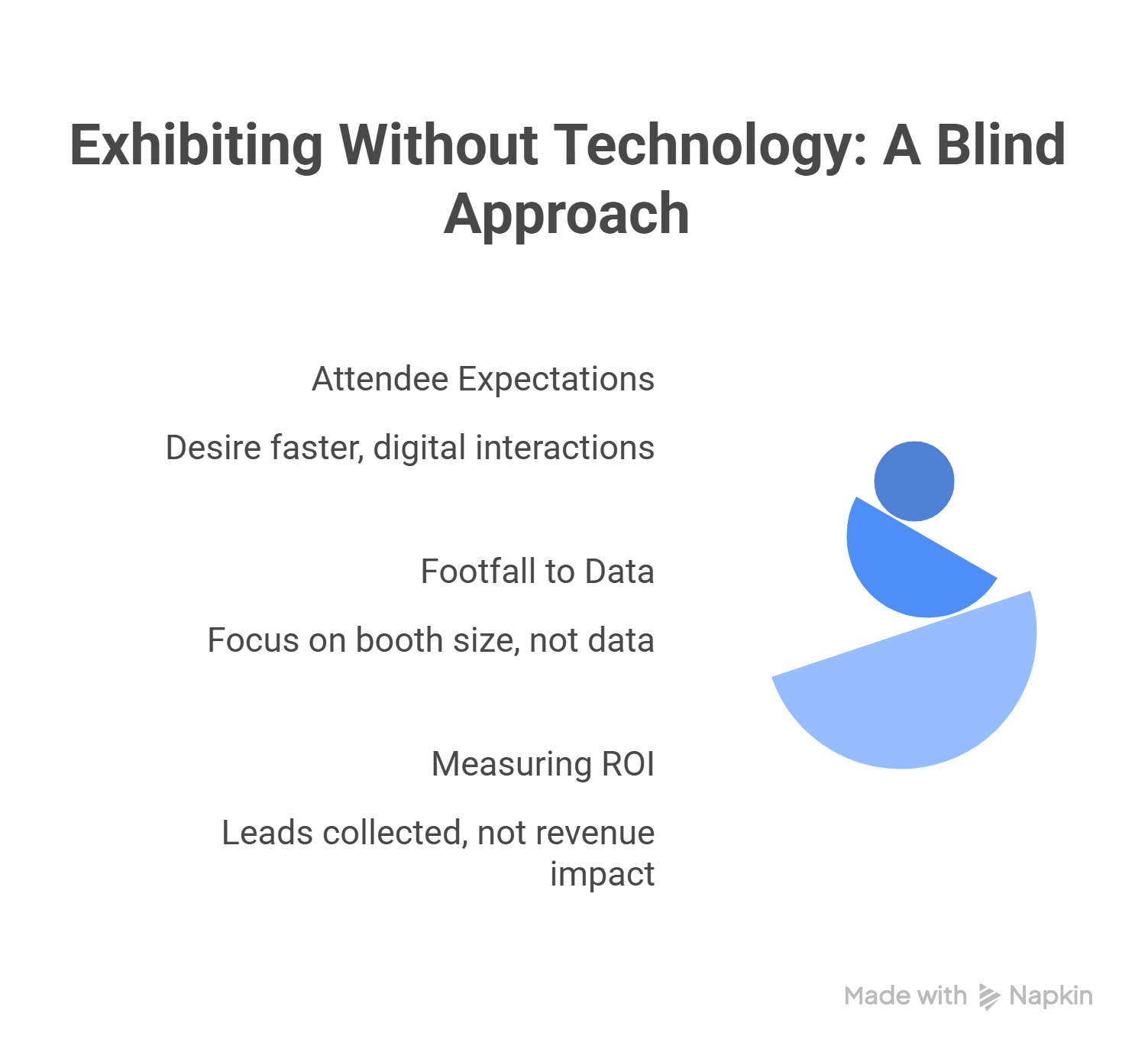
1. Attendee Expectations Have Changed
Today’s event attendees expect:
- Faster interactions
- Digital touchpoints instead of paper forms
- Personalized conversations
- Seamless follow-ups after the event
If your booth still relies on:
- Manual business card collection
- Paper sign-up sheets
- Memory-based follow-ups
You are already behind.
2. From Footfall to Data-Driven Booth Performance
Traditional exhibiting focused on:
- Booth size
- Location
- Brand visibility
Modern exhibiting focuses on:
- Who visited the booth
- How long they stayed
- What content they engaged with
- Whether they converted post-event
Event technology enables exhibitors to track real behavioral data, not assumptions.
3. Measuring ROI Beyond “Leads Collected”
Not all leads are equal.
Event technology helps exhibitors:
- Score leads based on interaction depth
- Segment visitors by interest or intent
- Sync event data with CRM and sales pipelines
- Prove revenue impact—not just attendance numbers
This shift from vanity metrics to business metrics is why exhibitor technology adoption has accelerated globally.
Core Types of Event Technology for Exhibitors
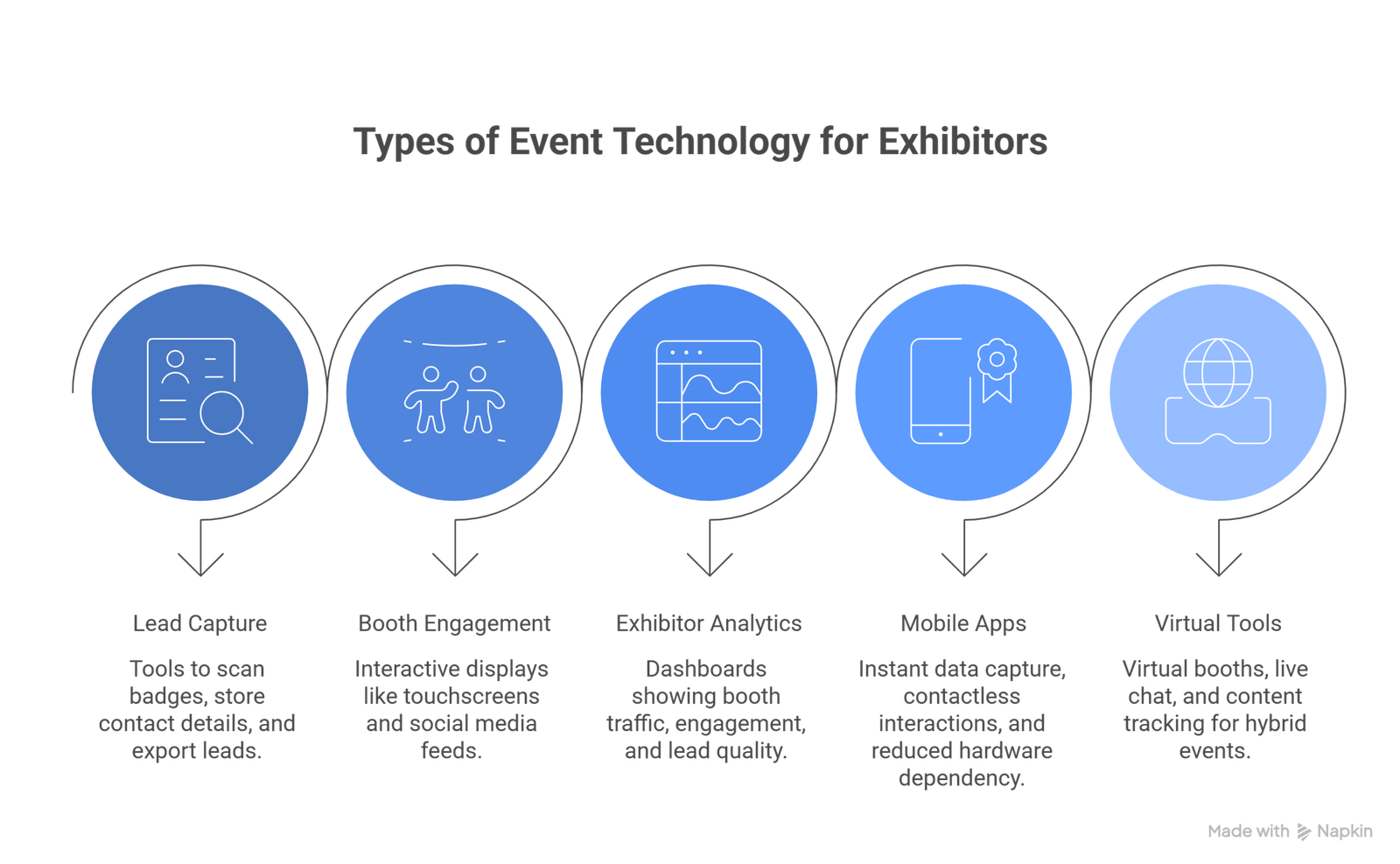
This is the pillar section—the backbone of exhibitor success.
1. Lead Capture & Lead Retrieval Technology
Lead capture tools allow exhibitors to:
- Scan attendee badges or QR codes
- Instantly store contact details
- Add notes, tags, and interest levels
- Export or sync leads to CRM systems
Why it matters:
Manual lead collection causes data loss, delayed follow-ups, and missed revenue opportunities.
2. Booth Engagement & Interactive Display Technology
Engagement tools transform booths from static displays into interactive experiences.
Common formats include:
- Touchscreen displays
- Live social content feeds (Social Wall)
- Interactive polls and quizzes
- Product demos and configurators
Result: Higher dwell time, better conversations, and stronger brand recall.
3. Exhibitor Analytics & Performance Dashboards
Analytics tools provide visibility into:
- Booth traffic patterns
- Engagement duration
- Content interaction
- Lead quality distribution
Instead of guessing booth performance, exhibitors can optimize in real time—even during the event.
4. Mobile Apps, QR Codes & Badge Scanning
Mobile-first exhibitor tools allow:
- Instant data capture via smartphones
- Contactless interactions
- Faster staff onboarding
- Reduced hardware dependency
QR-based engagement has become especially effective for high-volume exhibitions.
5. Virtual & Hybrid Exhibitor Tools
For virtual and hybrid events, exhibitor technology includes:
- Virtual booths
- Live chat and video meetings
- Downloadable content tracking
- Attendee behavior analytics
Hybrid exhibitor tools ensure equal visibility and data access, whether attendees are onsite or remote.
How Event Technology Improves Exhibitor ROI
The biggest misconception about event tech is that it’s a “nice-to-have.” In reality, it directly impacts revenue.
Faster & Smarter Lead Qualification
By capturing interaction data:
- Sales teams prioritize hot leads
- Marketing teams personalize follow-ups
- Conversion cycles shorten
Personalized Attendee Engagement
Event technology allows exhibitors to:
- Tailor conversations based on attendee interest
- Deliver relevant content instantly
- Avoid generic, one-size-fits-all pitches
Post-Event Follow-Up That Actually Converts
With structured data:
- Follow-ups happen within hours, not weeks
- Messaging aligns with attendee behavior
- ROI becomes measurable and repeatable
Event Technology for Physical, Virtual & Hybrid Exhibitions
Not all exhibitions are the same—and neither is the technology exhibitors need. The best-performing exhibitors adapt their technology stack based on event format.
Event Technology for Exhibitors in a Physical Trade Shows
For in-person exhibitions, technology focuses on speed, efficiency, and real-time engagement.
Key tools include:
- Badge scanning and QR-based lead capture
- Interactive booth screens and live demos
- Mobile lead capture apps for booth staff
- Real-time analytics dashboards
Why it works:
Physical events are fast-paced. Exhibitors who remove friction from conversations capture more leads and deliver better attendee experiences.
Event Technology for Virtual Exhibitions
Virtual exhibitions rely heavily on digital engagement and behavior tracking.
Common virtual exhibitor tools:
- Virtual booths with branded layouts
- Live chat and video meeting integrations
- Content download tracking
- Attendee journey analytics
Success factor:
Visibility alone doesn’t drive ROI—interaction does. Technology helps exhibitors identify which attendees are genuinely interested.
Event Technology for Hybrid Events
Hybrid events combine the complexity of both formats.
Effective hybrid exhibitor technology enables:
- Unified lead capture from online and onsite attendees
- Consistent branding across physical and virtual booths
- Centralized analytics for all interactions
- Equal engagement opportunities for remote audiences
Key advantage:
Hybrid-ready technology prevents data silos and ensures exhibitors don’t lose insights across formats.
How to Choose the Right Event Technology for Exhibitors
Choosing the wrong technology can hurt adoption, slow teams down, and reduce ROI. These factors matter more than feature lists.
1. Budget & Scalability
Ask:
- Does pricing scale with event size or usage?
- Can the platform support multiple events per year?
- Are there hidden setup or export costs?
Rule of thumb:
Choose technology that grows with your exhibition strategy, not just a single event.
2. CRM & Marketing Tool Integration
Your event data is only valuable if it flows into your existing systems.
Look for:
- CRM integrations (sales and marketing tools)
- Exportable data formats
- API or automation support
This ensures event leads don’t die in spreadsheets.
3. Ease of Use for Booth Staff
Even the most powerful platform fails if booth staff don’t use it.
Prioritize:
- Mobile-friendly interfaces
- Minimal training requirements
- Offline functionality (for poor connectivity venues)
Reality check:
Booth staff are multitasking. Technology must simplify—not complicate—their workflow.
4. Data Privacy & Compliance
Event data often includes personal information.
Ensure:
- GDPR and regional compliance
- Secure data storage
- Clear consent mechanisms
Trust is a ranking signal—and a business requirement.
Best Practices for Using Event Technology at Exhibitions
Technology alone doesn’t guarantee success. Execution does.
Pre-Event Best Practices
Before the event:
- Configure lead capture fields properly
- Define lead qualification criteria
- Train booth staff on tools and talking points
- Test hardware, QR codes, and integrations
Pro tip:
Align sales and marketing teams on what qualifies as a “good lead” before the event starts.
Live Event Optimization
During the event:
- Monitor engagement metrics in real time
- Adjust booth messaging based on visitor interest
- Encourage staff to add notes and tags to leads
- Rotate interactive content to avoid fatigue
Live optimization can significantly improve outcomes even on Day 2 or Day 3.
Post-Event Data & Follow-Up Strategy
After the event:
- Segment leads by intent and engagement
- Trigger personalized follow-up campaigns
- Share insights with sales teams immediately
- Review analytics to improve future booth strategies
Speed matters:
The faster the follow-up, the higher the conversion rate.
Common Mistakes Exhibitors Make with Event Technology
Avoid these frequent pitfalls:
❌ Collecting leads without qualification
❌ Using technology without staff training
❌ Delaying follow-ups by weeks
❌ Ignoring analytics and insights
❌ Treating event tech as a one-time tool
Event technology works best when it’s part of a long-term exhibiting strategy, not a one-off experiment.
Event technology helps exhibitors succeed across physical, virtual, and hybrid events by improving lead capture, engagement, analytics, and post-event ROI when implemented strategically.
Real-World Examples & Case Studies
Google increasingly rewards content that reflects real experience, not just theory. Below are practical scenarios that demonstrate how exhibitors use event technology to drive measurable outcomes.
Case Study 1: Increasing Qualified Leads at a Trade Show
A B2B SaaS exhibitor at a large industry expo replaced paper forms with a mobile lead capture system.
Before event technology
- Manual data entry
- Delayed follow-ups (7–10 days)
- No lead prioritization
After implementing exhibitor technology
- 100% digital lead capture
- Leads tagged by interest level
- CRM sync within 24 hours
Result:
✔ Higher lead quality
✔ Faster sales outreach
✔ Improved post-event conversion rateCase Study 2: Improving Booth Engagement with Interactive Displays
exhibitor at a consumer-focused exhibition introduced interactive screens and live content displays at their booth.
What changed:
- Attendees spent more time at the booth
- Staff had better conversation starters
- Engagement data identified top-performing content
Result:
✔ Increased dwell time
✔ Better brand recall
✔ More meaningful conversationsCase Study 3: Hybrid Event ROI Measurement
At a hybrid conference, exhibitors used unified analytics to track:
- Onsite booth visits
- Virtual booth interactions
- Content downloads
- Meeting requests
Outcome:
✔ One combined performance report
✔ Clear attribution for online and offline leads
✔ Smarter budget planning for future eventsExpert Insights: What Experienced Exhibitors Know
From seasoned event marketers and exhibitors:
“Events stopped being brand exercises and became revenue channels the moment we started using data-driven exhibitor technology.”
Key takeaways from experienced exhibitors:
- Technology should support conversations—not replace them
- Lead quality matters more than volume
- Real-time insights outperform post-event guesswork
These perspectives reinforce Experience and Expertise, two critical EEAT pillars.
Frequently Asked Questions About Event Technology for Exhibitors
What is event technology for exhibitors?
Event technology for exhibitors includes digital tools that help brands capture leads, engage attendees, track booth performance, and measure ROI across physical, virtual, and hybrid events.
How does event technology help exhibitors generate more leads?
By enabling faster interactions, digital lead capture, engagement tracking, and personalized follow-ups, exhibitor technology increases both lead volume and quality.
Is event technology useful for small exhibitors?
Yes. Even small exhibitors benefit from basic lead capture and analytics tools that prevent data loss and improve follow-up efficiency.
What tools do exhibitors use at trade shows?
Common tools include badge scanners, QR codes, mobile lead capture apps, interactive booth displays, analytics dashboards, and CRM integrations.
How do exhibitors measure ROI using event technology?
Exhibitors track metrics such as booth visits, engagement duration, lead quality, follow-up conversions, and post-event revenue attribution.
Ready to Maximize Your Exhibitor ROI?
Exhibiting without the right technology means lost leads, missed insights, and unclear ROI.
The right event technology helps you engage smarter, capture better leads, and prove real business impact.👉 Explore exhibitor technology solutions or book a demo today
👉 Turn every booth interaction into measurable growth