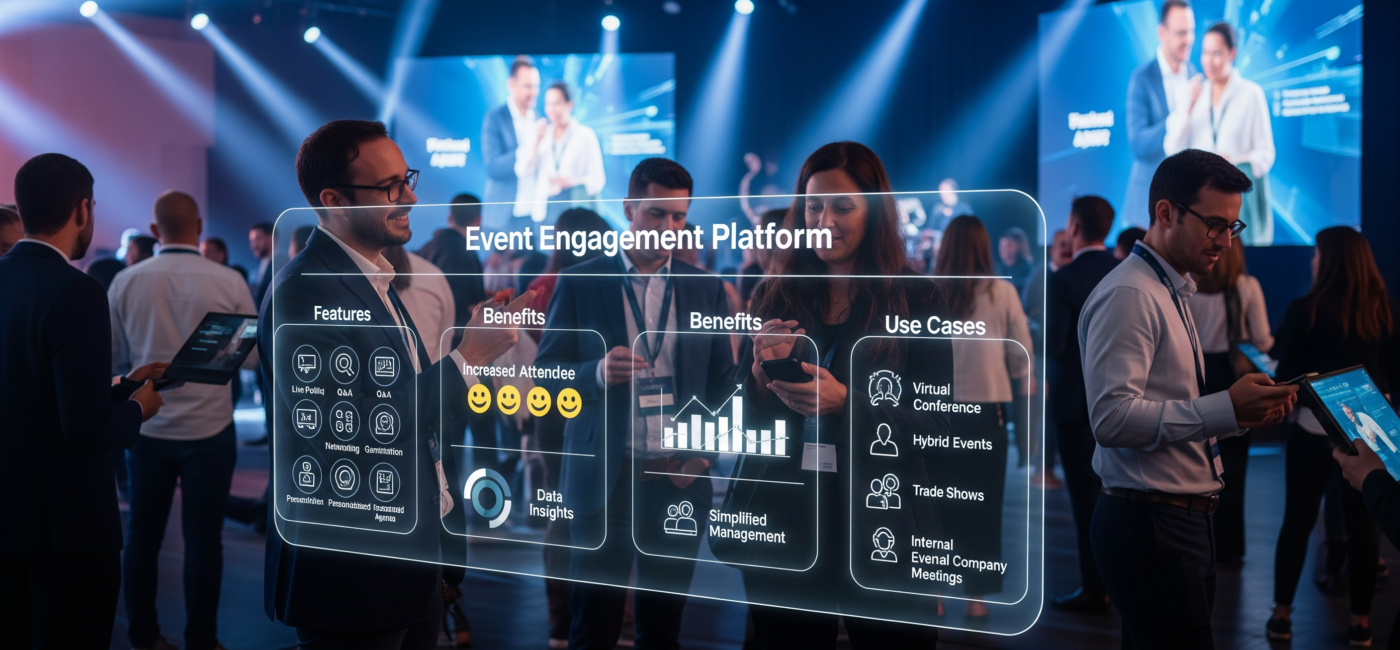
An event engagement platform is a digital solution designed to help event organizers increase attendee interaction, participation, and networking before, during, and after an event. By combining tools like social media walls, live polling, Q&A, networking, gamification, analytics, and event apps, these platforms transform passive attendees into active participants and deliver measurable outcomes for organizers, sponsors, and exhibitors.
In an era of virtual, hybrid, and experience-driven in-person events, engagement is no longer optional—it directly impacts event success, ROI, and attendee satisfaction.
What is an Event Engagement Platform?

An event engagement platform is software built to facilitate meaningful interactions between attendees, speakers, sponsors, and organizers throughout the entire event lifecycle.
Unlike basic event tools that focus only on registration or scheduling, an event attendee engagement platform is designed to:
- Encourage real-time participation
- Enable networking and connections
- Capture engagement data and insights
- Extend engagement beyond the event itself
These platforms are commonly used for conferences, trade shows, corporate events, webinars, and hybrid experiences.
How an Event Engagement Platform Works
An event engagement platform typically works in three stages:
Before the event
- Attendee onboarding and profiles
- Agenda exploration and session planning
- Pre-event networking and matchmaking
During the event
- Live polls, Q&A, and session feedback
- Gamification and participation rewards
- Live social media wall
- In-session networking and chat
- Mobile app or web-based engagement
After the event
- Engagement analytics and reports
- Attendee follow-ups and content access
- Lead data for sponsors and sales teams
This end-to-end engagement approach helps organizers measure success beyond attendance numbers alone.
Why Event Engagement Platforms Matter in 2026
The Engagement Challenge in Modern Events
Today’s attendees expect more than static presentations and one-way communication. Whether the event is in-person, virtual, or hybrid, low engagement often results in:
- Reduced session attendance
- Poor networking outcomes
- Low sponsor satisfaction
- Minimal post-event ROI
An event engagement platform directly addresses these challenges by creating interactive, personalized, and data-driven experiences.

Impact on Attendee Experience and Event ROI
Higher engagement leads to:
- Better knowledge retention
- More meaningful connections
- Increased sponsor visibility and lead generation
- Stronger attendee satisfaction and repeat attendance
For organizers, this means clearer insights into what worked, what didn’t, and how to optimize future events.
In-Person vs Virtual vs Hybrid Engagement
Event engagement platforms are especially critical for:
- Virtual events, where interaction replaces physical presence
- Hybrid events, where engagement must be consistent across online and on-site audiences
- Large in-person events, where technology enables scalable participation
The right platform ensures no audience segment feels disconnected.
Core Features of an Event Engagement Platform
While features vary by provider, top-performing event engagement platforms consistently offer the following core capabilities.

Networking and Attendee Matchmaking
Advanced networking tools help attendees:
- Create detailed profiles
- Discover relevant connections
- Schedule meetings
- Engage in one-to-one or group chats
Matchmaking powered by interests, roles, or goals increases the quality of connections rather than leaving networking to chance.
Live Polls, Q&A, and Audience Interaction
Real-time interaction tools allow attendees to:
- Vote in live polls
- Ask questions during sessions
- Upvote questions
- Provide instant feedback
These features increase session participation and give speakers immediate audience insights.
Gamification and Engagement Incentives
Gamification elements such as:
- Points
- Leaderboards
- Challenges
- Badges
Encourage active participation throughout the event. When designed correctly, gamification boosts engagement without feeling forced or gimmicky.
Event Apps and Mobile Engagement
Many platforms include a mobile app or mobile-optimized experience that allows attendees to:
- Access agendas and speaker info
- Participate in sessions on the go
- Receive notifications and reminders
- Network anytime, anywhere
Mobile engagement is especially important for in-person and hybrid events.
Analytics, Insights, and Engagement Tracking
One of the most valuable aspects of an event engagement platform is analytics.
Organizers can track:
- Session attendance and participation
- Poll and Q&A engagement
- Networking activity
- Content interaction
- Sponsor and exhibitor engagement
These insights help prove ROI and guide future event strategy.
Also Read: Event Technology for Exhibitors
Integrations with Other Event Tools
Modern event engagement platforms often integrate with:
- CRM systems
- Marketing automation tools
- Event registration software
- Streaming and webinar platforms
This ensures engagement data flows seamlessly into existing workflows and business systems.
Use Cases of an Event Engagement Platform Across Event Types

Event engagement platforms are flexible by design. Their value becomes most visible when tailored to different event formats and objectives.
Conferences and Trade Shows
For large-scale conferences and trade shows, engagement platforms help solve common challenges such as audience fragmentation and limited networking time.
Typical use cases include:
- Session-based live polling and Q&A
- Attendee matchmaking based on interests or roles
- Sponsored activities and branded engagement
- Gamification to encourage booth visits and session attendance
The result is higher attendee participation, better sponsor ROI, and clearer post-event insights.
Corporate Meetings and Internal Events
Internal events often struggle with passive participation, especially in remote or hybrid environments.
Event engagement platforms enable:
- Real-time feedback during town halls
- Anonymous Q&A to encourage honest participation
- Engagement tracking across teams and departments
- Post-event surveys and sentiment analysis
These features help leadership measure engagement levels and improve internal communication.
Virtual and Hybrid Events
Virtual and hybrid events rely heavily on engagement technology to replicate in-person interaction.
Key use cases include:
- Virtual networking lounges
- Interactive live sessions
- Cross-audience engagement between on-site and remote attendees
- Engagement analytics across formats
Without an engagement platform, virtual events risk becoming one-way broadcasts rather than interactive experiences.
Webinars, Workshops, and Community Events
For smaller, content-focused events, engagement platforms help:
- Increase attendance retention
- Encourage discussion and participation
- Collect feedback and learning insights
- Build ongoing communities beyond a single session
This makes them ideal for education, training, and community-building initiatives.
Event Engagement Platform vs Event App
Wondering what is the majort difference between a comprehensive event management apps and event engagement platforms? Here’s what makes them really different.
Key Differences Explained
An event management app typically focuses on logistics and information delivery, such as:
- Event schedules
- Speaker profiles
- Venue maps
- Basic notifications
An event engagement platform, on the other hand, goes further by enabling:
- Two-way interaction
- Networking and matchmaking
- Live audience participation
- Engagement analytics and reporting
While some platforms include an event app as part of their offering, the engagement platform represents a broader, more strategic solution.
When You Need a Full Event Engagement Platform
You likely need an event engagement platform if:
- Engagement and participation are core success metrics
- Networking and interaction are key event goals
- You need measurable ROI and engagement data
- Sponsors and exhibitors expect digital value
If your event only requires agenda access and announcements, a basic event app may be sufficient. For anything more strategic, an engagement platform is the better choice.
Common Misconceptions
A common misconception is that engagement happens naturally once attendees join an event. In reality, engagement must be designed, enabled, and measured. Technology plays a critical role in making that possible at scale.
Benefits of Using an Event Engagement Platform
Higher Attendee Participation
Interactive tools encourage attendees to:
- Ask questions
- Share opinions
- Participate actively rather than passively
This leads to more memorable and impactful event experiences.
Better Networking Outcomes
Matchmaking and structured networking reduce randomness and increase the quality of connections. Attendees are more likely to meet people who are relevant to their goals, whether that’s learning, collaboration, or business development.
Actionable Post-Event Insights
Instead of guessing event success, organizers gain access to real engagement data, including:
- Session-level interaction
- Content performance
- Networking activity
- Feedback and sentiment
These insights inform smarter decisions for future events.
Increased Sponsor and Exhibitor Value
Sponsors benefit from:
- Higher visibility through engagement tools
- Measurable interaction metrics
- Better-quality leads
This makes sponsorships easier to sell and renew.
Improved Event ROI
When engagement increases, so does the overall return on investment. Better experiences lead to higher satisfaction, repeat attendance, and stronger brand perception.
How to Choose the Right Event Engagement Platform
Choosing an event engagement platform is not about picking the tool with the longest feature list. It’s about selecting a solution that aligns with your event goals, audience size, and engagement strategy.
Must-Have Features Checklist
When evaluating platforms, prioritize the following essentials:
- Real-time interaction (polls, Q&A, live feedback)
- Attendee networking and matchmaking
- Mobile-friendly or event app support
- Engagement analytics and reporting
- Sponsor and exhibitor engagement tools
- Integration with CRM and marketing platforms
If a platform cannot clearly demonstrate how these features drive engagement, it may not be the right fit.
Scalability and Pricing Considerations
Consider:
- Number of attendees supported
- Pricing transparency and hidden costs
- Flexibility for virtual, hybrid, and in-person formats
- Long-term value rather than one-off event pricing
Scalability is especially important for organizations planning recurring or growing events.
Data Privacy, Security, and Compliance
With increasing data regulations, ensure the platform:
- Complies with GDPR and regional data laws
- Provides clear data ownership policies
- Offers secure data handling and access controls
Vendor Support and Onboarding
Strong onboarding, training, and ongoing support can significantly impact adoption and success. Look for vendors that provide:
- Guided onboarding
- Live support during events
- Clear documentation and training resources
Real-World Examples and First-Hand Experiences
Case Study: Improving Engagement at a Hybrid Conference
At a mid-sized hybrid conference, organizers implemented an event engagement platform to address low remote participation. By introducing live polls, moderated Q&A, and structured networking sessions, attendee interaction increased significantly, while post-event surveys showed higher satisfaction across both in-person and virtual audiences.
Key takeaways:
- Structured engagement increases participation
- Hybrid audiences need equal interaction opportunities
- Data insights help refine future event strategies
Expert Insight from Event Professionals
Audience Engagement platforms shift events from passive experiences to interactive environments. The most successful events treat engagement as a core strategy, not an add-on.
Upendra Goswami
Product Marketing Manager, Social Walls by Taggbox
Frequently Asked Questions
What is an event engagement platform?
An event engagement platform is software designed to increase attendee interaction, networking, and participation before, during, and after an event using interactive and analytical tools.
How does an event engagement platform work?
It works by providing tools such as live polls, Q&A, networking, gamification, and analytics that encourage participation and measure engagement throughout the event lifecycle.
What features should an event engagement platform have?
Core features include live interaction tools, networking capabilities, mobile access, engagement analytics, and integrations with other event and marketing systems.
How much does an event engagement platform cost?
Pricing varies based on event size, features, and format. Costs typically depend on the number of attendees, events, and engagement tools included.
Is an event engagement platform different from an event app?
Yes. An event app focuses on information delivery, while an event engagement platform enables interactive experiences, networking, and measurable engagement.
Ready to create more engaging and measurable events?
Discover how the right event engagement platform can increase participation, improve networking, and deliver real ROI for your next event.
👉 Explore solutions, request a demo, or compare platforms to find the best fit for your events.