AI in event security is changing how modern events prevent risks, manage crowds, and respond to threats in real time.
By using technologies like computer vision, machine learning, and behavioral analytics, AI helps event profs and organizers detect security issues faster, reduce human error, and maintain safety—without disrupting the attendee experience.
From concerts and sports events to conferences and hybrid experiences, AI-powered security systems are now a critical layer of modern event technology.
What Is AI in Event Security?
Definition of AI-Powered Event Security
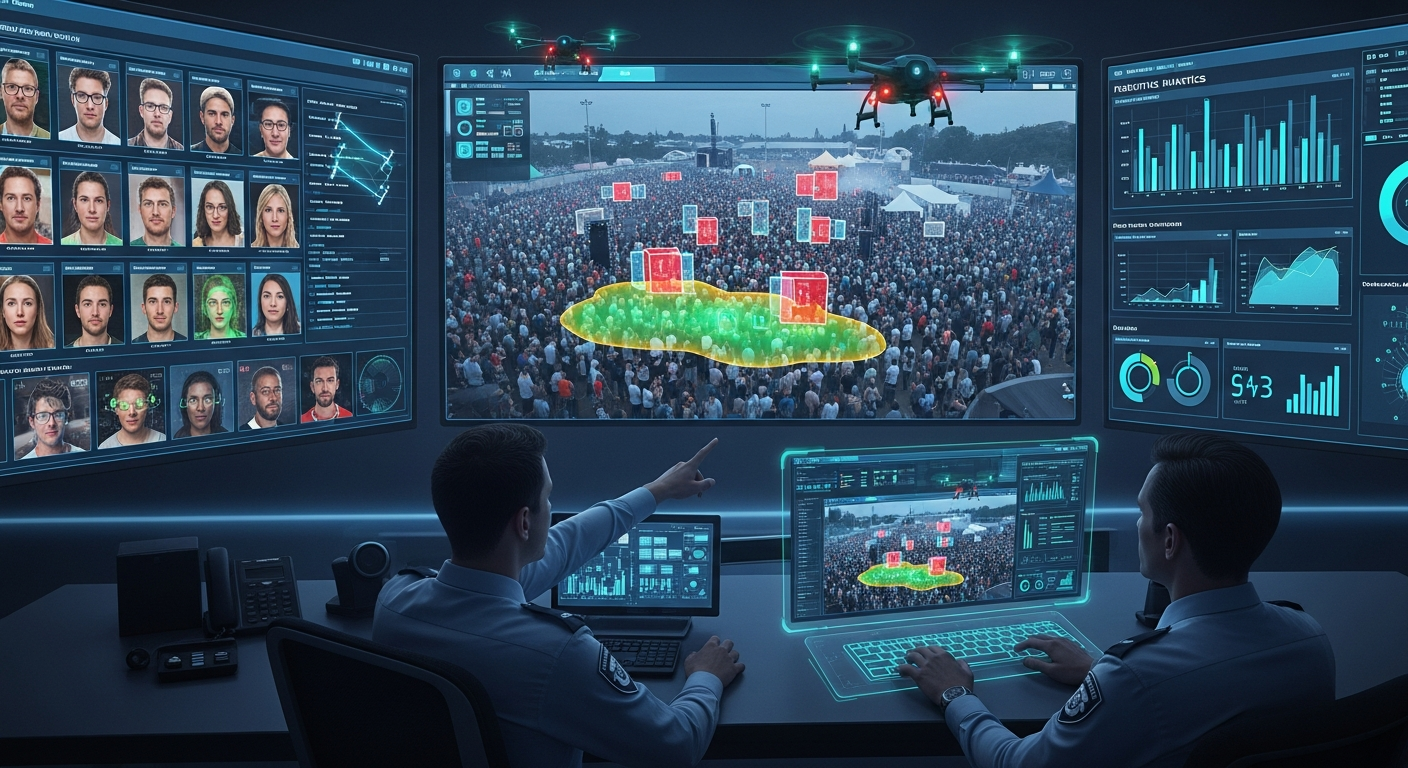
AI in event security refers to the use of artificial intelligence technologies—such as video analytics, facial recognition, and predictive algorithms—to monitor, analyze, and respond to security risks during events.
Instead of relying only on manual surveillance and reactive response, AI systems continuously analyze data from:
- CCTV cameras
- Access control systems
- Sensors and IoT devices
- Crowd movement patterns
This allows security teams to identify risks before they escalate.
Why Traditional Event Security Is No Longer Enough
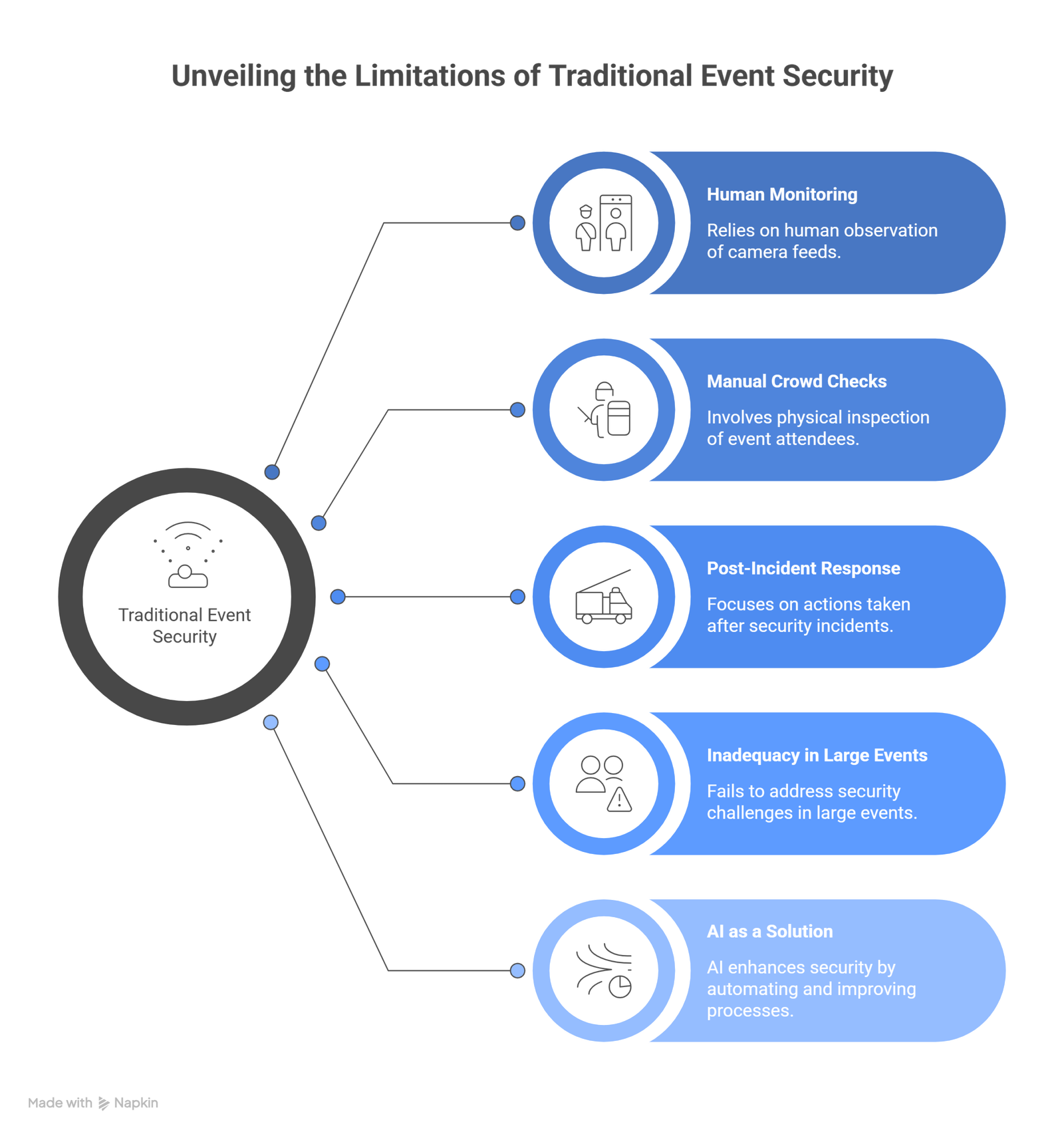
Traditional event security depends heavily on:
- Human monitoring of camera feeds
- Manual crowd checks
- Post-incident response
At small events, this may work. At large-scale or high-risk events, it creates problems:
- Security staff miss subtle threats
- Slow reaction times during peak crowd movement
- Difficulty monitoring multiple zones simultaneously
- Higher chances of human fatigue and error
AI fills these gaps by acting as a real-time decision support system for security teams.
How AI Enhances Human Security Teams
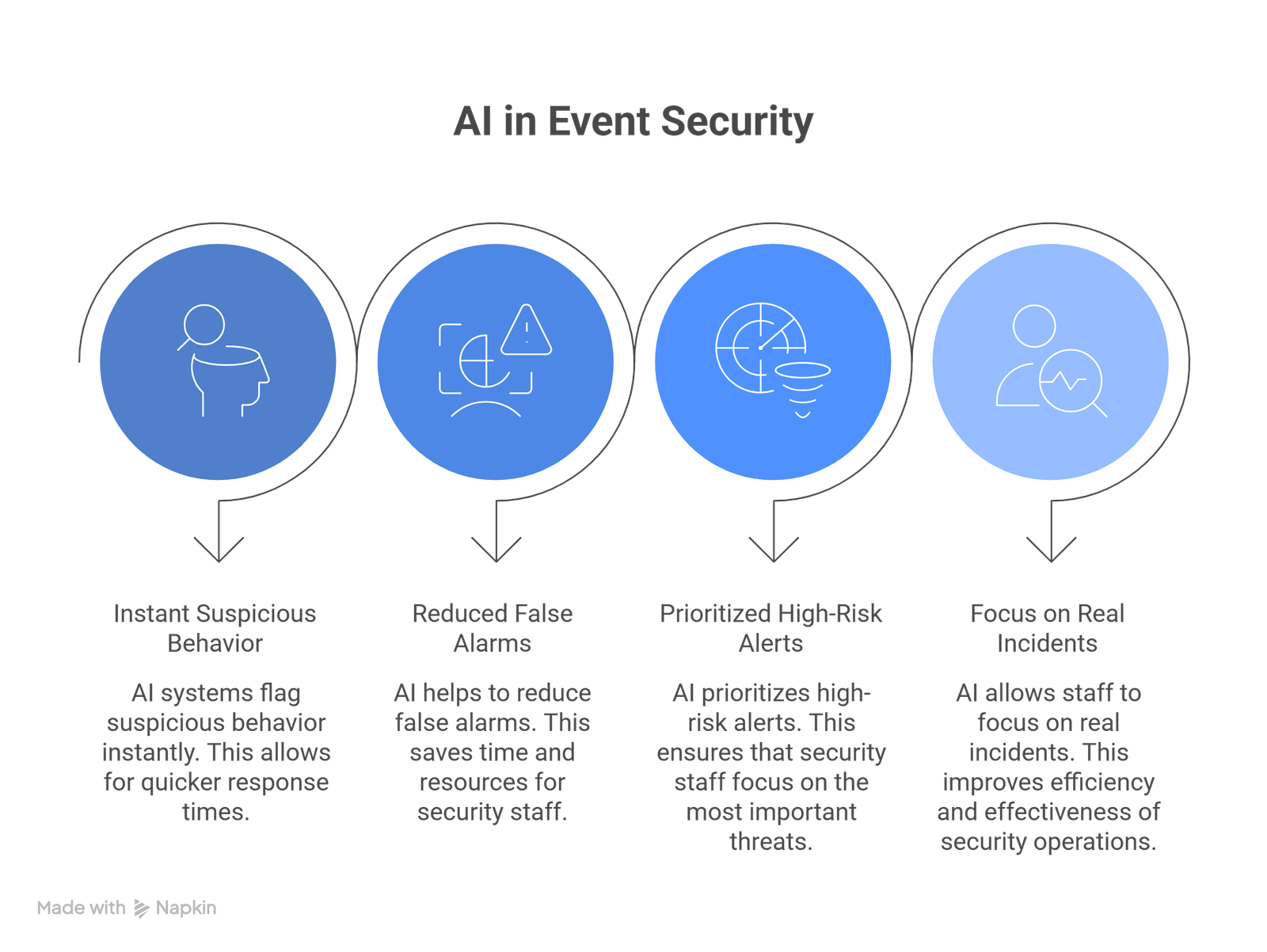
AI does not replace human security staff.
Instead, it augments them.
AI systems:
- Flag suspicious behavior instantly
- Reduce false alarms
- Prioritize high-risk alerts
- Allow staff to focus on real incidents instead of constant monitoring
This combination of human judgment + AI speed leads to safer and more controlled events.
How AI is Used in Event Security
AI-Based Crowd Monitoring & Density Analysis
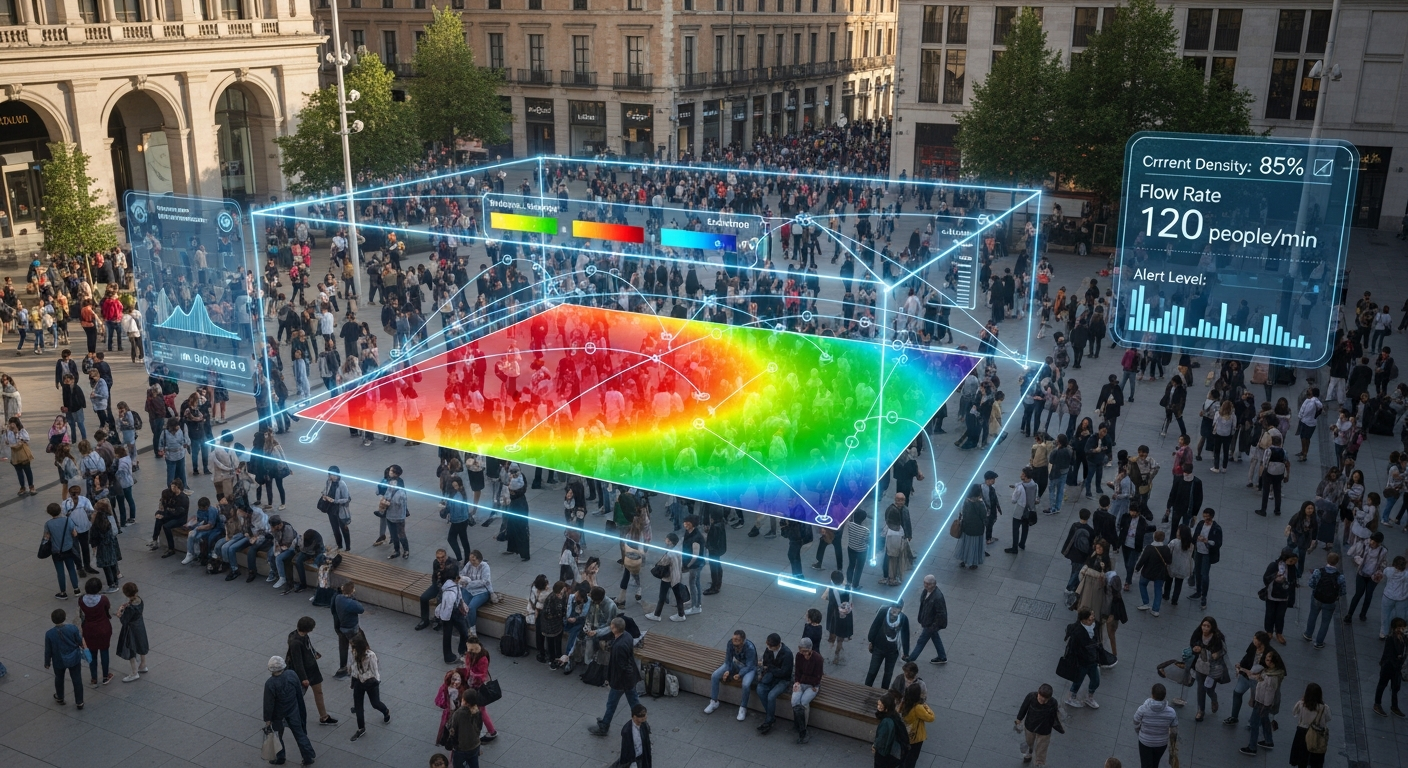
One of the most valuable uses of AI in event security is real-time crowd monitoring.
AI-powered systems analyze video feeds to:
- Measure crowd density
- Detect overcrowded zones
- Identify bottlenecks and unsafe movement patterns
- Generate live heatmaps
When crowd density crosses safe thresholds, security teams receive instant alerts—allowing them to redirect traffic, open additional entry points, or intervene before panic or accidents occur.
This is especially critical for:
- Music festivals
- Stadiums
- Large exhibitions
- Public celebrations
Real-Time Threat Detection & Anomaly Recognition
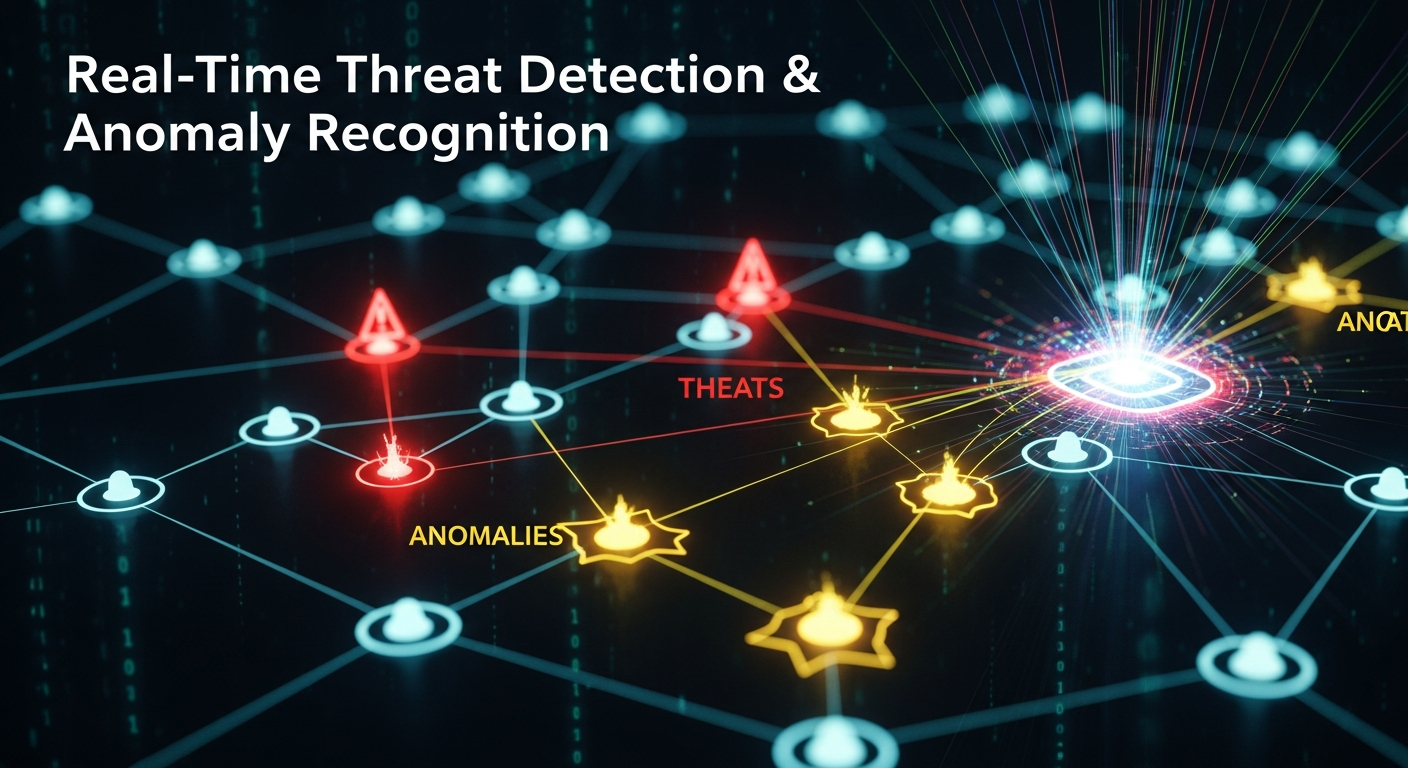
AI excels at detecting unusual or threatening behavior that humans may overlook.
Using machine learning models trained on thousands of scenarios, AI systems can:
- Identify aggressive movement
- Detect running in restricted zones
- Flag abandoned objects
- Recognize sudden crowd disturbances
Instead of reacting after an incident happens, AI enables proactive threat prevention.
Facial Recognition & Smart Access Control
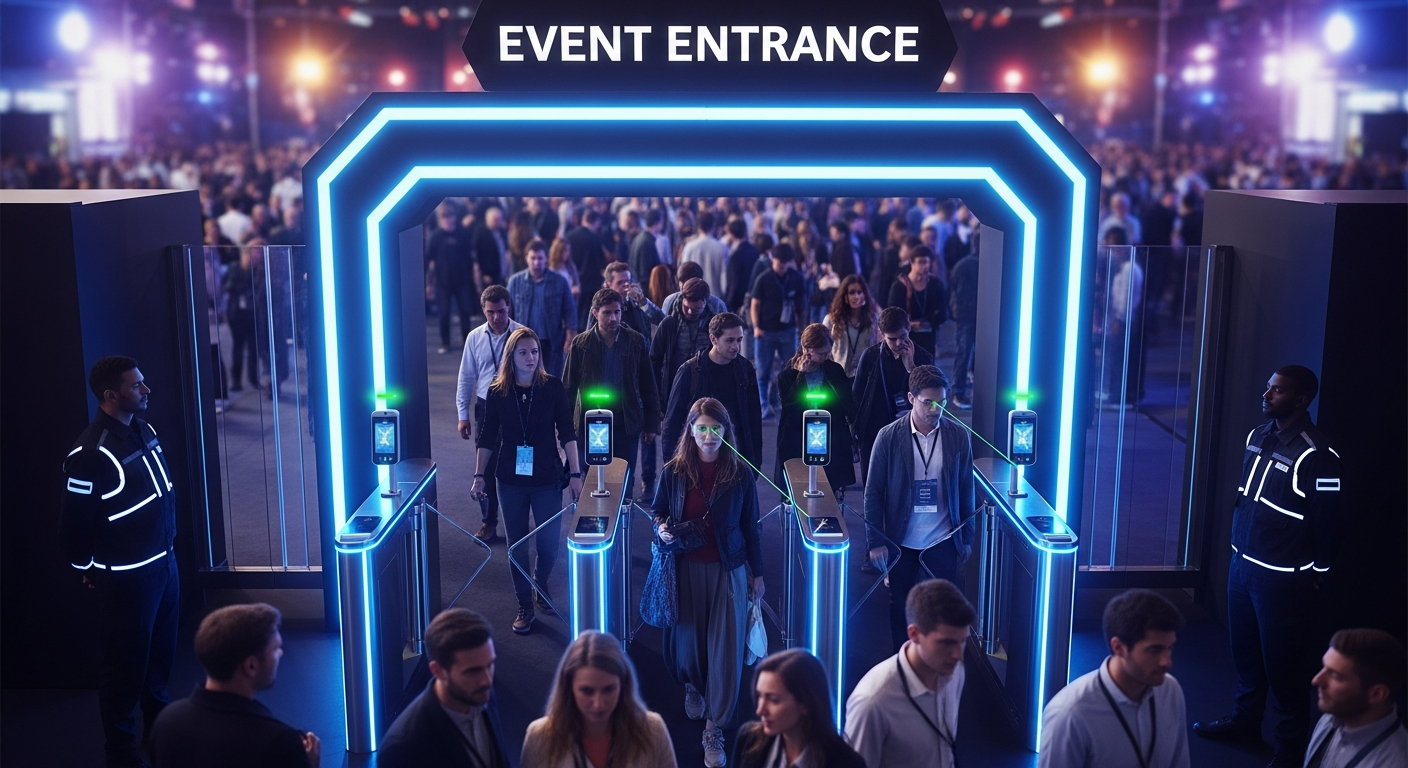
Facial recognition is increasingly used for secure and frictionless access control at events.
AI-based access systems can:
- Verify authorized personnel instantly
- Detect banned or flagged individuals
- Prevent ticket fraud and impersonation
- Speed up entry without manual ID checks
When used responsibly and in compliance with privacy laws, facial recognition improves both security and attendee experience.
Weapon, Object & Suspicious Behavior Detection
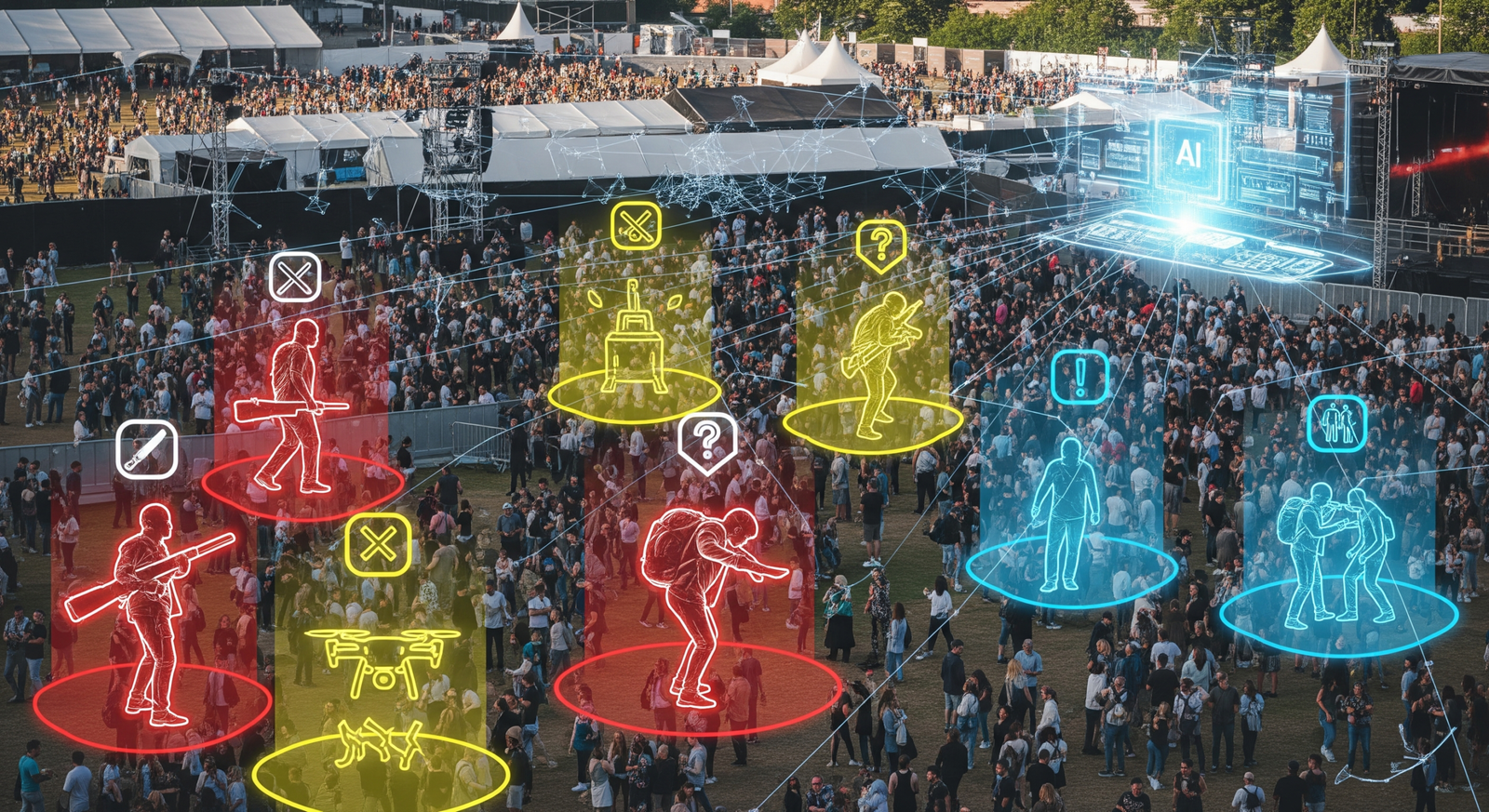
Advanced AI video analytics can automatically detect:
- Weapons or sharp objects
- Unattended bags
- Unauthorized equipment
- Suspicious gestures or posture
These detections trigger alerts before a threat becomes visible to staff or attendees, drastically reducing response time during critical situations.
AI-Driven Incident Prediction & Early Warnings
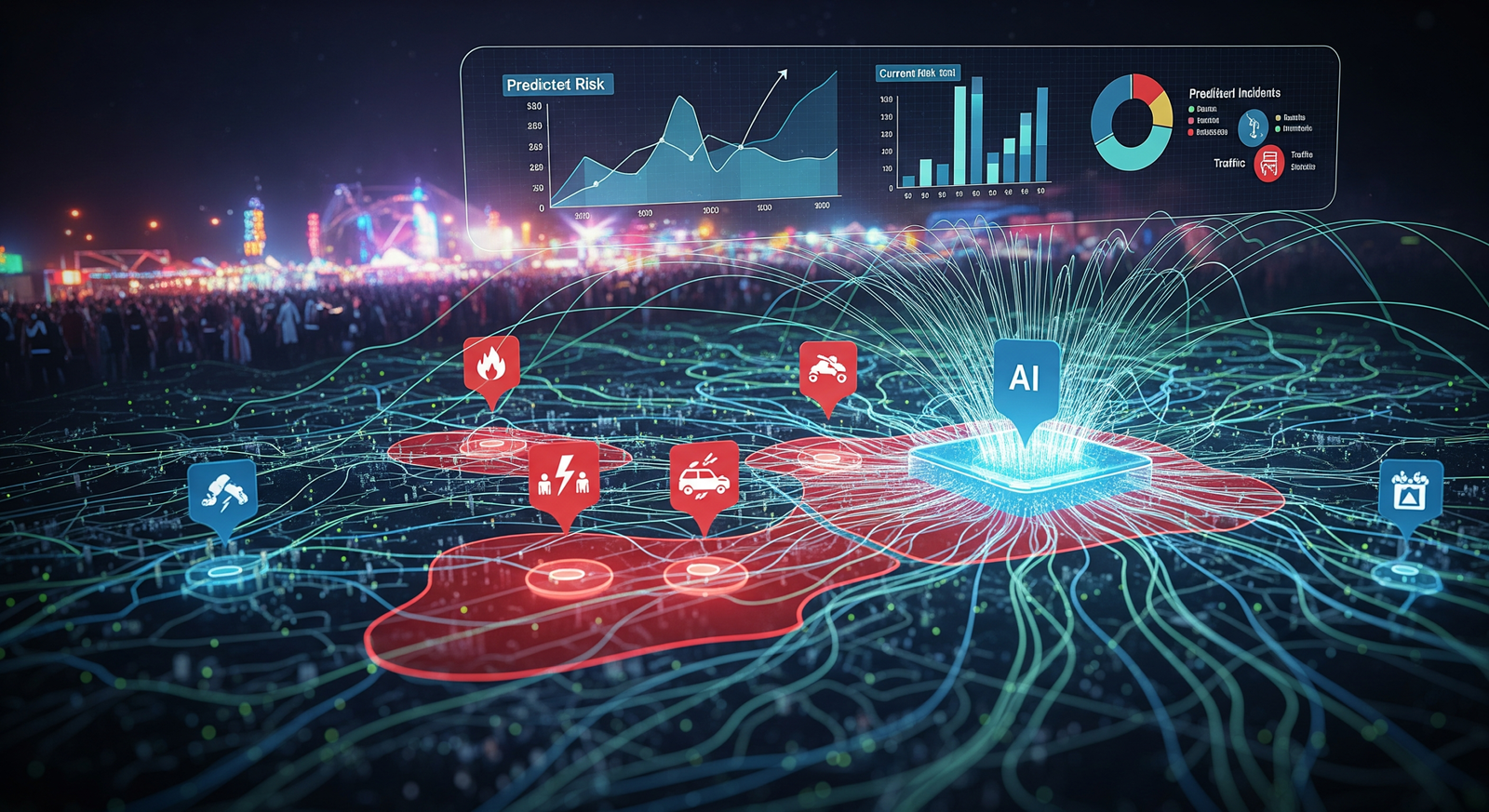
Some AI systems go beyond detection and move into prediction.
By analyzing:
- Historical event data
- Crowd behavior trends
- Time-based patterns
- Environmental factors
AI can predict where and when incidents are likely to occur, allowing organizers to deploy resources strategically instead of reacting blindly.
Key Benefits of AI in Event Security
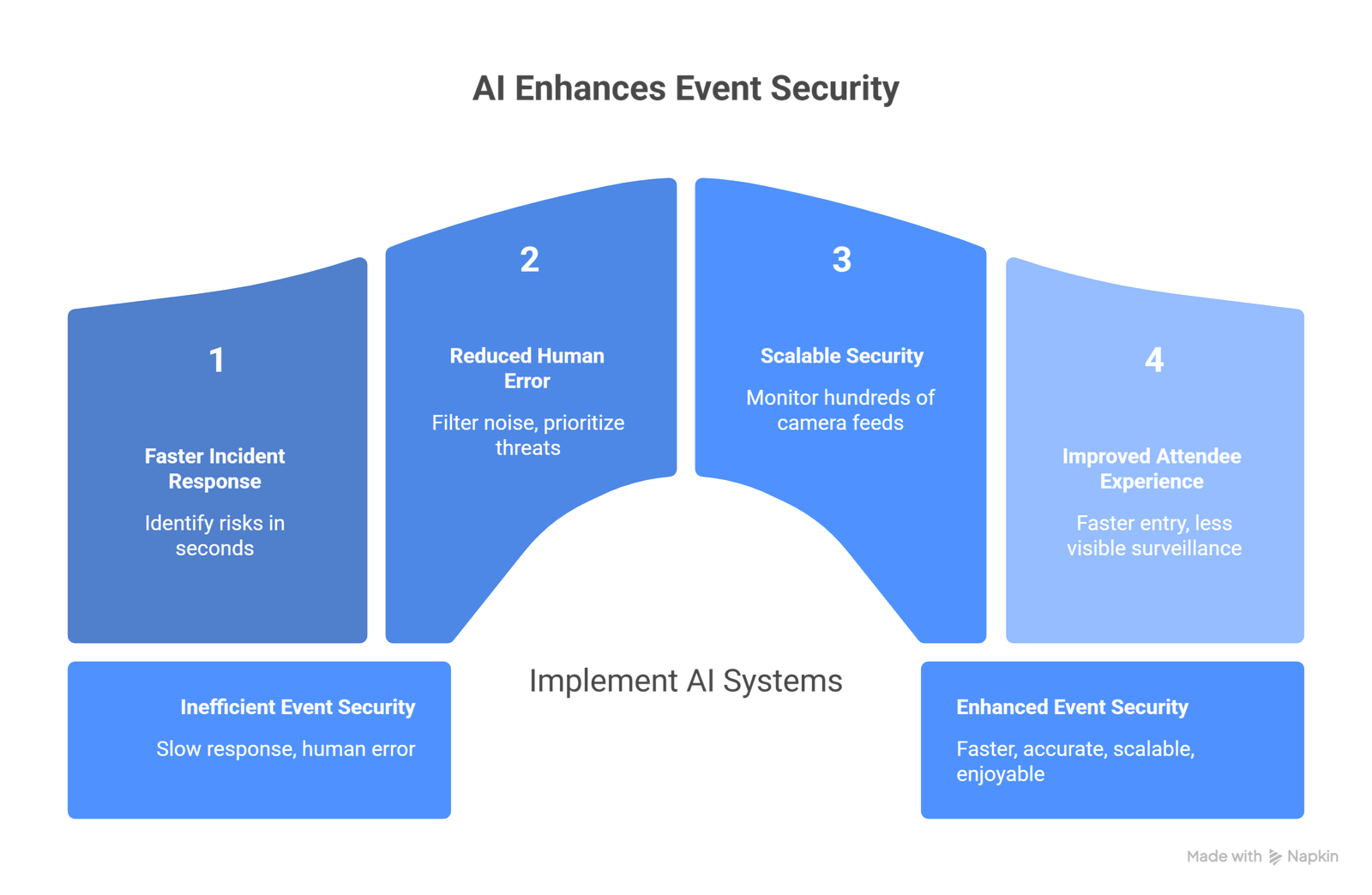
Faster Incident Response & Prevention
AI identifies risks in seconds—not minutes.
This speed is often the difference between a controlled situation and a major security incident.
Reduced Human Error & False Alarms
By filtering noise and prioritizing real threats, AI:
- Reduces alert fatigue
- Improves accuracy
- Ensures security teams act only when necessary
Scalable Security for Large & Multi-Venue Events
AI systems can monitor hundreds of camera feeds simultaneously, making them ideal for:
- Multi-day festivals
- City-wide events
- Large convention centers
Improved Attendee Experience Without Friction
Strong security doesn’t need to feel intrusive.
AI enables:
- Faster entry
- Less visible surveillance
- Smoother crowd flow
The result is safer events that still feel enjoyable and open.
AI in Event Security for Different Event Types
AI-powered security adapts to the scale, risk profile, and environment of different events. Below is how it’s applied across major event formats.
AI Security for Concerts & Music Festivals
Concerts and festivals present unique challenges:
- High crowd density
- Alcohol consumption
- Low visibility environments
- Sudden crowd surges
AI systems help by:
- Monitoring crowd pressure and movement in real time
- Detecting aggressive behavior early
- Identifying unsafe crowd formations before they escalate
Heatmaps and predictive alerts allow organizers to intervene before incidents like stampedes or crowd collapse occur.
AI Security for Sports Events & Stadiums
Stadiums require continuous, multi-zone surveillance.
AI security supports:
- Monitoring seating sections, concourses, and entry gates simultaneously
- Detecting unauthorized field access
- Managing large ingress and egress flows
Because sports venues host recurring events, AI models improve accuracy over time by learning venue-specific behavior patterns.
AI Security for Conferences & Trade Shows
Corporate and business events prioritize:
- Controlled access
- VIP protection
- Intellectual property security
AI enhances conference security by:
- Enabling smart RFID badges or facial-recognition-based access
- Detecting unauthorized recording or restricted-area access
- Monitoring exhibition halls for theft or suspicious activity
This allows event staff to maintain security without disrupting networking and engagement.
AI Security for Hybrid & Virtual Events
Security risks don’t disappear in digital environments.
AI plays a growing role in hybrid and virtual event security by:
- Detecting abusive behavior in live chats
- Preventing session hijacking and unauthorized access
- Monitoring engagement anomalies
- Moderating user-generated content in real time
Virtual AI security tools integrate seamlessly with major virtual event platforms and operate alongside live streams—ensuring a safe digital experience for remote attendees.
Privacy, Ethics & Compliance in AI Event Security
Data Privacy & Attendee Consent
One of the biggest concerns with AI security is data handling.
Best practices include:
- Transparent data usage policies
- Clear attendee consent mechanisms
- Minimal data retention
- Anonymization where possible
Events that openly communicate how AI is used build trust instead of resistance.
Facial Recognition Ethics at Events
Facial recognition must be handled carefully.
Responsible usage includes:
- Limiting use to access control or high-risk scenarios
- Avoiding mass surveillance without purpose
- Providing opt-out options where legally required
- Ensuring no discriminatory bias in AI models
Ethical implementation protects both attendees and organizers from legal and reputational risk.
Compliance With Global Data Protection Laws
Event organizers must comply with regulations such as:
- GDPR
- Local data protection acts
- Venue-specific privacy requirements
AI vendors and organizers should jointly ensure:
- Lawful data processing
- Secure storage
- Audit-ready systems
Compliance is not optional—it is now a core part of event security planning.
How Event Organizers Can Use AI Responsibly
Responsible AI usage requires:
- Human oversight
- Clear security objectives
- Regular audits
- Transparent communication
AI should support safety—not become a surveillance liability.
Real-World Examples & Case Studies
Large-Scale Crowd Management at Live Events
At high-attendance festivals, AI-powered crowd analytics has helped:
- Identify dangerous density zones
- Reduce emergency response times
- Prevent crowd-related injuries
Security teams receive live alerts and actionable insights rather than raw video feeds.
AI-Driven Threat Detection at High-Risk Events
For high-profile events, AI systems have successfully:
- Flagged unattended objects early
- Detected suspicious loitering near restricted areas
- Assisted law enforcement with rapid situational awareness
These systems enable prevention rather than reaction.
Lessons Learned From Live Event Deployments
Real deployments show that AI works best when:
- Integrated early into event planning
- Used alongside trained human staff
- Tuned to the venue and audience profile
Events that treat AI as a strategic tool—not a last-minute add-on—see the best results.
AI Tools & Technologies Powering Event Security
Computer Vision & Video Analytics
Computer vision allows AI to “see”:
- Movements
- Gestures
- Objects
- Patterns
This forms the backbone of most AI security platforms.
Machine Learning & Behavioral Analysis
Machine learning models analyze:
- Normal vs abnormal behavior
- Crowd rhythm
- Event-specific patterns
The more data they process, the more accurate they become.
Integration With CCTV, IoT & Access Systems
AI doesn’t work in isolation.
It integrates with:
- Existing CCTV infrastructure
- Access control systems
- IoT sensors
- Incident management platforms
This makes AI adoption cost-effective and scalable.
AI + Location Intelligence
Combining AI with location data enables:
- Zone-based alerts
- Geofenced security rules
- Smarter incident coordination
This is especially valuable for large venues and city-wide events.
How to Implement AI in Event Security (Step-by-Step)
Step 1 – Assess Event Risk & Security Needs
Start by evaluating:
- Event size
- Audience profile
- Venue complexity
- Threat history
AI should address real risks, not theoretical ones.
Step 2 – Choose the Right AI Security Platform
Look for solutions that offer:
- Proven use cases
- Compliance readiness
- Easy integration
- Transparent AI decision-making
Avoid overcomplicated systems that staff can’t operate.
Step 3 – Train Teams & Integrate Systems
Security staff must:
- Understand AI alerts
- Know escalation procedures
- Trust the system’s insights
Training is critical to success.
Step 4 – Monitor, Optimize & Audit Performance
Post-event analysis helps:
- Improve future deployments
- Reduce false positives
- Strengthen predictive accuracy
AI security improves with continuous feedback.
FAQs About AI in Event Security
How does AI improve event security?
AI improves event security by continuously monitoring crowd behavior, detecting threats in real time, and alerting security teams before incidents escalate. Unlike manual surveillance, AI systems analyze hundreds of data points simultaneously, reducing response time and human error.
Is AI event security safe for attendee privacy?
Yes—when implemented responsibly. Ethical AI security systems prioritize data minimization, anonymization, and transparency. Event organizers should clearly communicate how AI is used and comply with data protection regulations such as GDPR to protect attendee privacy.
Can AI replace human security staff at events?
No. AI is designed to support, not replace, human security teams. AI handles monitoring, pattern recognition, and alerts, while humans make judgment calls, manage incidents, and interact with attendees. The most effective security strategy combines both.
How accurate is AI-based threat detection?
Modern AI security systems are highly accurate, especially when trained on real-world event data. Accuracy improves over time as AI models learn venue-specific and event-specific behavior patterns. However, human oversight remains essential to validate alerts.
What is the cost of AI security for events?
Costs vary based on event size, duration, number of cameras, and features used. Many AI security platforms are scalable, making them suitable for both small events and large multi-day festivals. Long-term, AI often reduces costs by preventing incidents and optimizing staff deployment.
Future of AI in Event Security
Predictive & Autonomous Event Security
The future of AI in event security is predictive rather than reactive.
Emerging systems will:
- Forecast crowd risks before they form
- Automatically adjust access rules
- Trigger preventive actions without manual intervention
This shift will redefine how safety planning is done for large-scale events.
AI + Digital Twins for Event Safety Planning
Digital twins—virtual replicas of venues—are being combined with AI to simulate:
- Crowd flow scenarios
- Emergency evacuations
- Worst-case security situations
This allows organizers to test security strategies before the event begins.
What Event Organizers Should Prepare for Next
To stay ahead, event organizers should:
- Invest in scalable AI security platforms
- Train teams on AI-assisted decision-making
- Establish ethical AI usage guidelines
- Treat security as a core experience factor—not a background function
AI will soon become a baseline expectation, not a differentiator.