Attendee engagement refers to how actively participants interact with an event’s content, speakers, technology, and fellow attendees before, during, and after the event. High engagement is reflected through behaviors such as session attendance, live Q&A participation, polling activity, networking interactions, social sharing, and post-event feedback.
- What Is Attendee Engagement and Why It Matters
- Defining Attendee Engagement Metrics
- The Business Impact of High Attendee Engagement
- How Attendee Engagement Has Evolved
- Event Engagement Strategies for 2026
- During-Event Engagement Techniques
- Attendee Engagement Tools that Actually Help
- Attendee Engagement Tactics by Event Format
- Common During-Event Attendee Engagement Mistakes
- During-Event Attendee Engagement Quick Checklist
- Post-Event Engagement & Analysis
- Measuring Success & Maintaining Momentum (SGE-Ready)
- Why Post-Event Engagement Is a Competitive Advantage
- Engagement Measurement & Analytics Framework
- Calculating Engagement ROI
- Post-Event Surveys That Actually Get Responses
- Why Most Surveys Fail
- Turning Engagement into Community
- Post-Event Engagement Checklist
- The Attendee Engagement Lifecycle
- Frequently Asked Questions (FAQs)
- What is attendee engagement?
- Why is attendee engagement important for events?
- What are the best attendee engagement strategies?
- How do you measure attendee engagement at events?
- What is the difference between attendee engagement and attendee satisfaction?
- How can you improve engagement in virtual events?
- What tools help increase attendee engagement?
- When should attendee engagement start and end?
In today’s competitive event landscape—where audiences attend countless virtual, hybrid, and in-person experiences—engagement is no longer optional. It directly influences event ROI, sponsor satisfaction, repeat attendance, and brand trust. This guide breaks down what attendee engagement really means, why it matters, and how to improve it using proven strategies and modern event technology.
What Is Attendee Engagement and Why It Matters
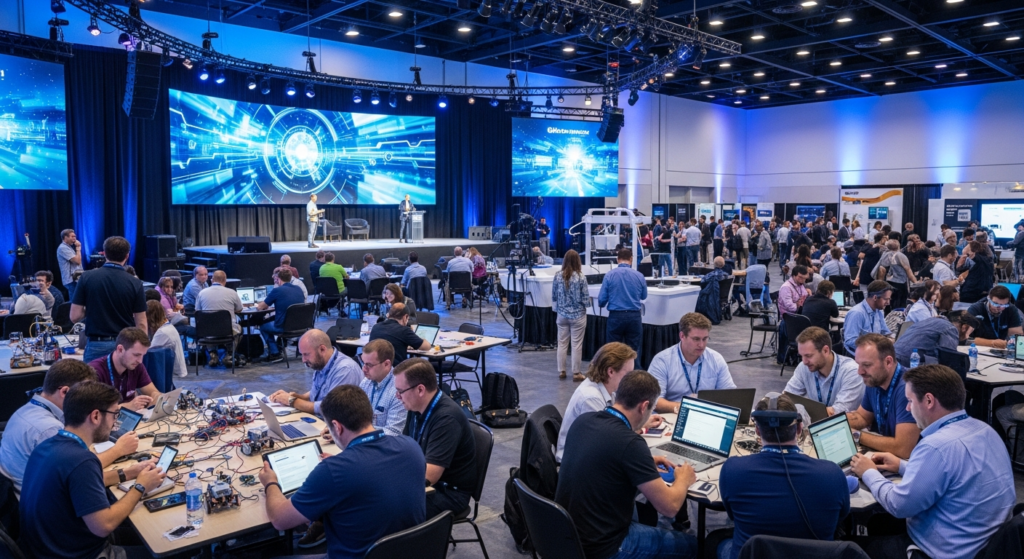
Attendee engagement is the measure of how emotionally, intellectually, and behaviorally involved participants are with your event.
It goes beyond attendance numbers and focuses on participation quality.
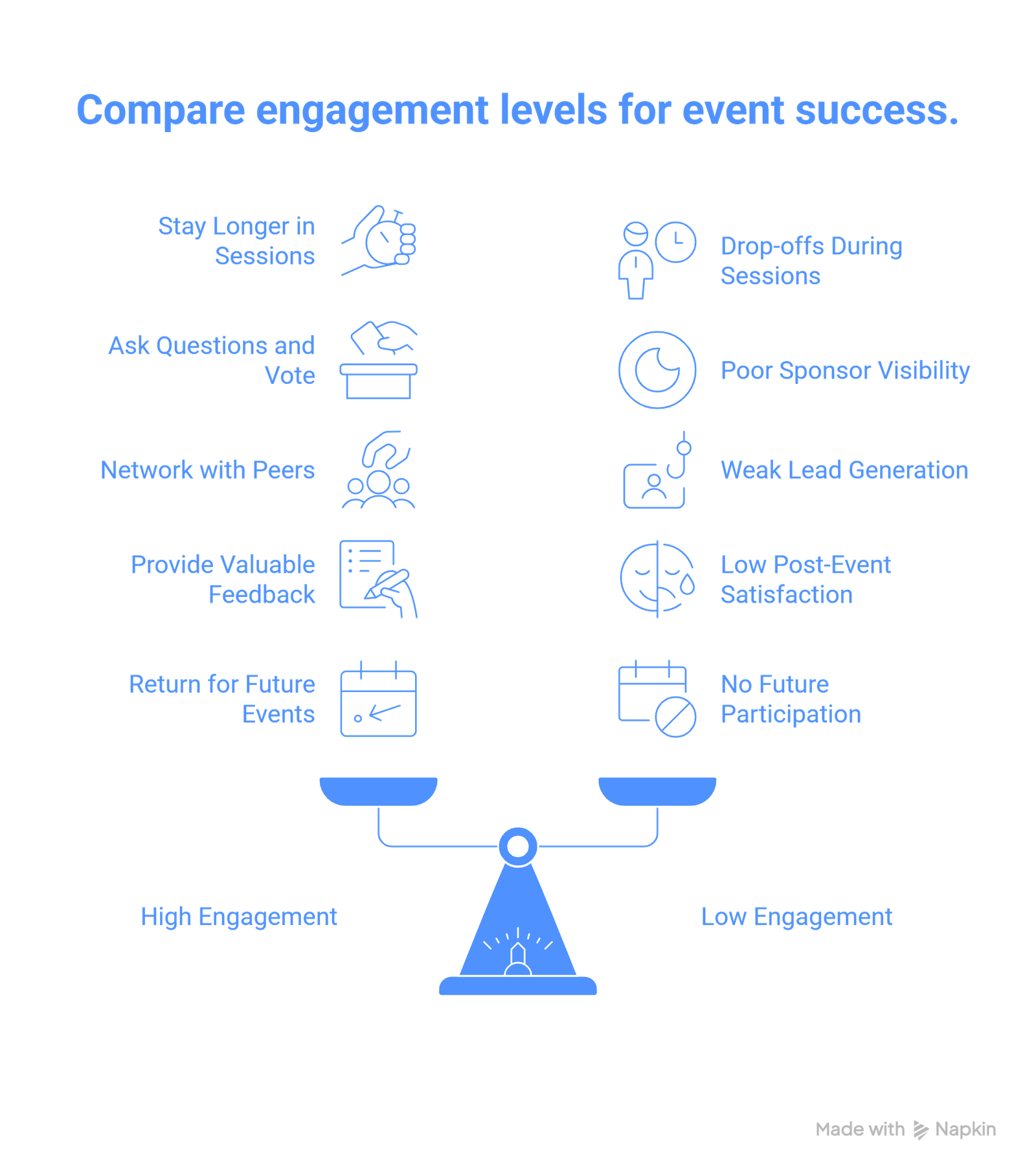
Highly engaged attendees:
- Stay longer in sessions
- Ask questions and vote in polls
- Network with peers
- Share content on social media
- Provide valuable feedback
- Are more likely to return for future events
Low engagement, on the other hand, results in:
- Drop-offs during sessions
- Poor sponsor visibility
- Weak lead generation
- Low post-event satisfaction scores
In short, engagement is the strongest indicator of event success.
Defining Attendee Engagement Metrics
To improve engagement, you must first measure it accurately. The most effective event teams track a mix of quantitative and qualitative metrics.
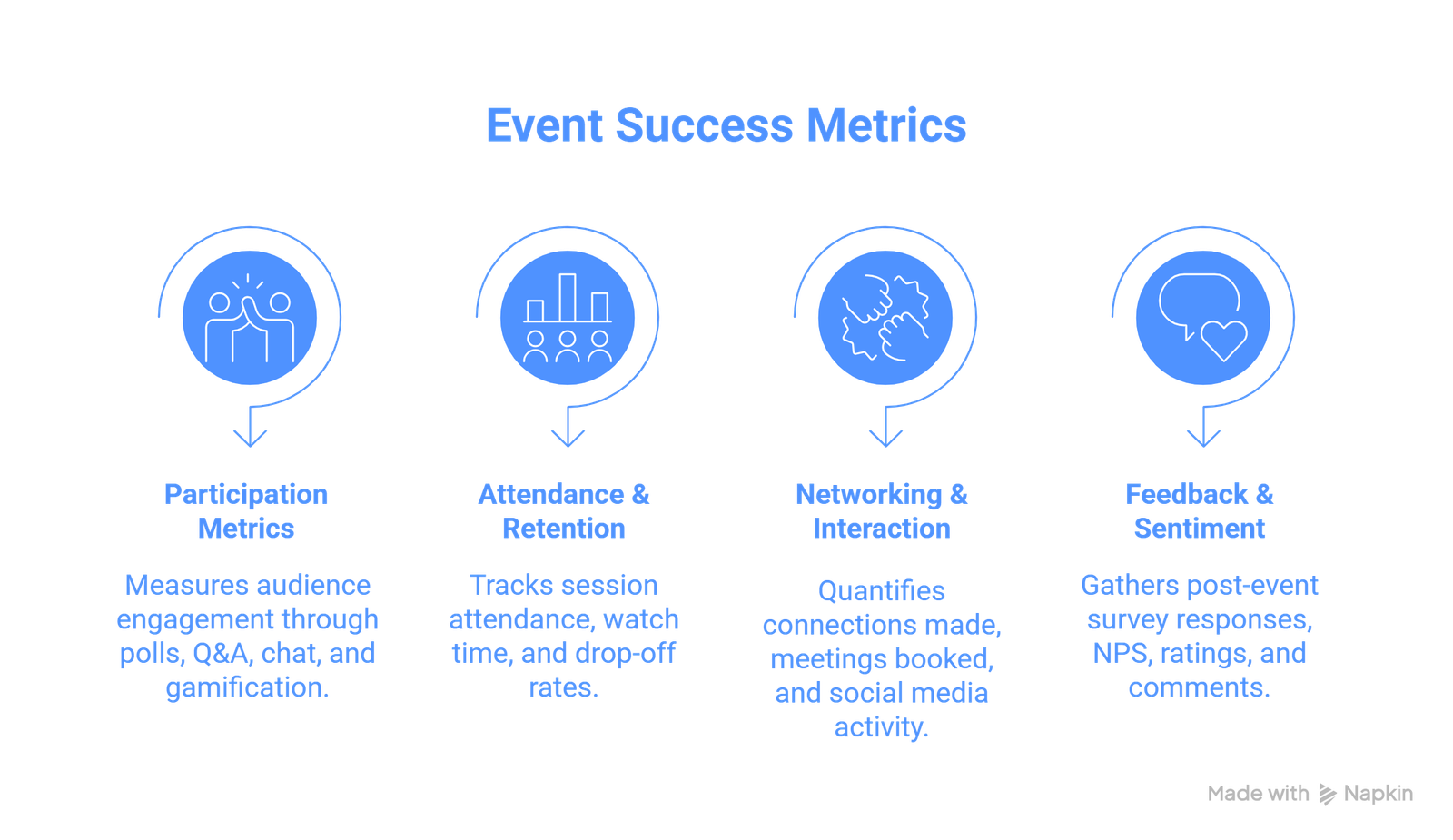
Core Attendee Engagement Metrics
1. Participation Metrics
- Poll response rates
- Q&A submissions
- Chat messages (virtual & hybrid)
- Gamification activity
2. Attendance & Retention
- Session attendance vs registrations
- Average session watch time
- Session drop-off rates
3. Networking & Interaction
- Number of connections made
- Meetings booked via event app
- Social wall posts or UGC submissions
4. Feedback & Sentiment
- Post-event survey responses
- Net Promoter Score (NPS)
- Session ratings and comments
Also Read: Role of Technology in Event Management
The Business Impact of High Attendee Engagement
Engagement isn’t just a “nice-to-have” metric — it directly impacts revenue, brand perception, and long-term growth.
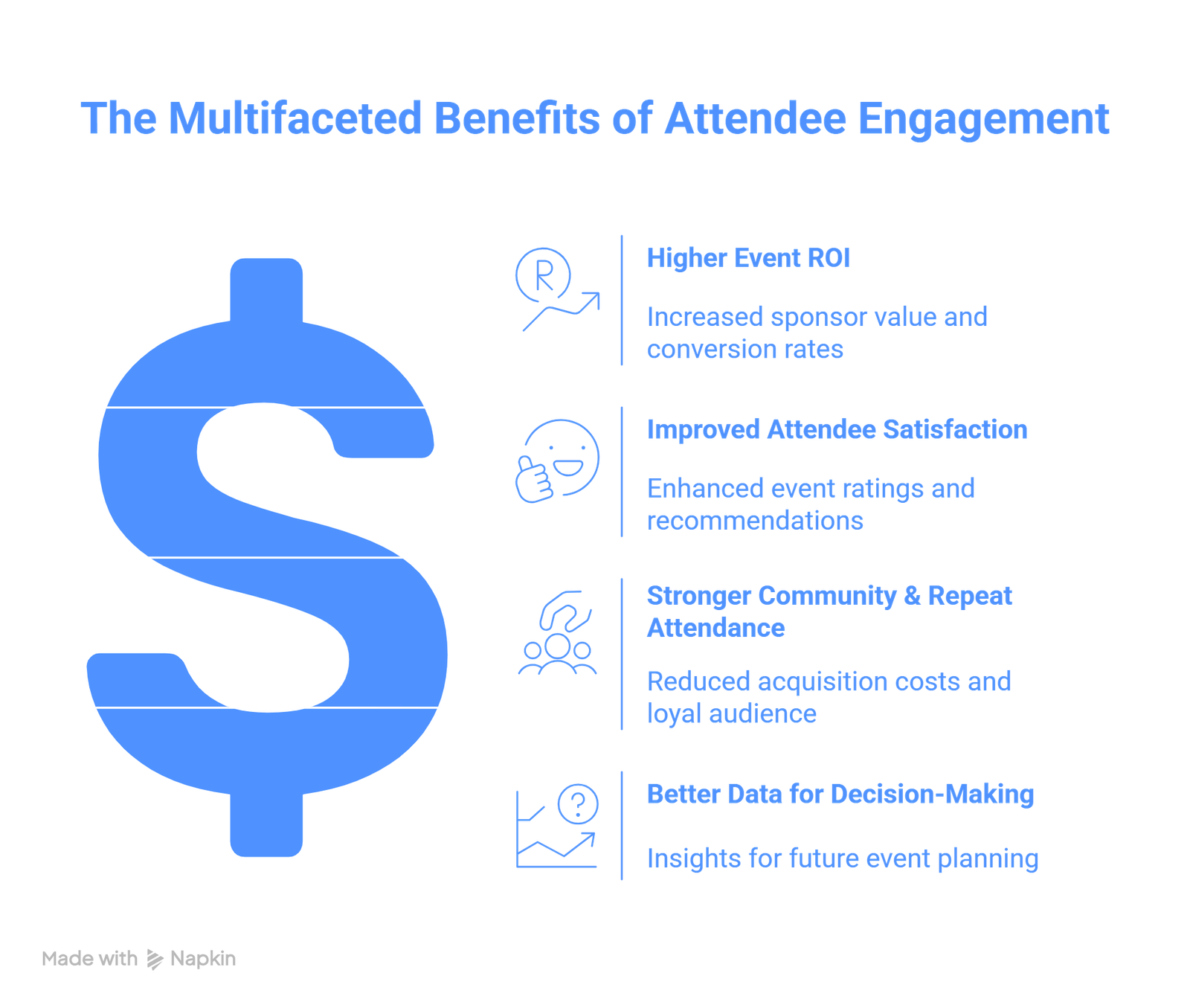
1. Higher Event ROI
Engaged attendees consume more content, interact with sponsors, and convert better. Sponsors see:
- Higher booth traffic
- More qualified leads
- Greater brand recall
2. Improved Attendee Satisfaction
Participants who feel heard and involved rate events significantly higher and are more likely to recommend them.
3. Stronger Community & Repeat Attendance
Events with consistent engagement strategies build communities, not just audiences. This reduces acquisition costs for future editions.
4. Better Data for Decision-Making
Engagement data reveals:
- Which sessions worked
- Which speakers resonated
- Which formats should be repeated or dropped
This makes every future event smarter and more profitable.
How Attendee Engagement Has Evolved
Attendee engagement has shifted from passive consumption to active participation.
| Then(90s) | Now |
|---|---|
| One-way presentations | Two-way interaction |
| Static agendas | Dynamic, adaptive content |
| Paper feedback forms | Real-time analytics |
| Manual networking | AI-powered matchmaking |
| Post-event surveys | Continuous engagement lifecycle |
This evolution is driven by:
- Event apps & platforms
- Social walls and live displays
- Audience response systems
- Gamification & rewards
- Data-driven personalization
Attendee engagement is not a single tactic — it’s a system.
It combines psychology, technology, content strategy, and measurement to create meaningful event experiences.
Pre-Event Engagement Strategies
Event Engagement Strategies for 2026
Pre-event Engagement Strategy – Building Excitement Before Your Event Starts
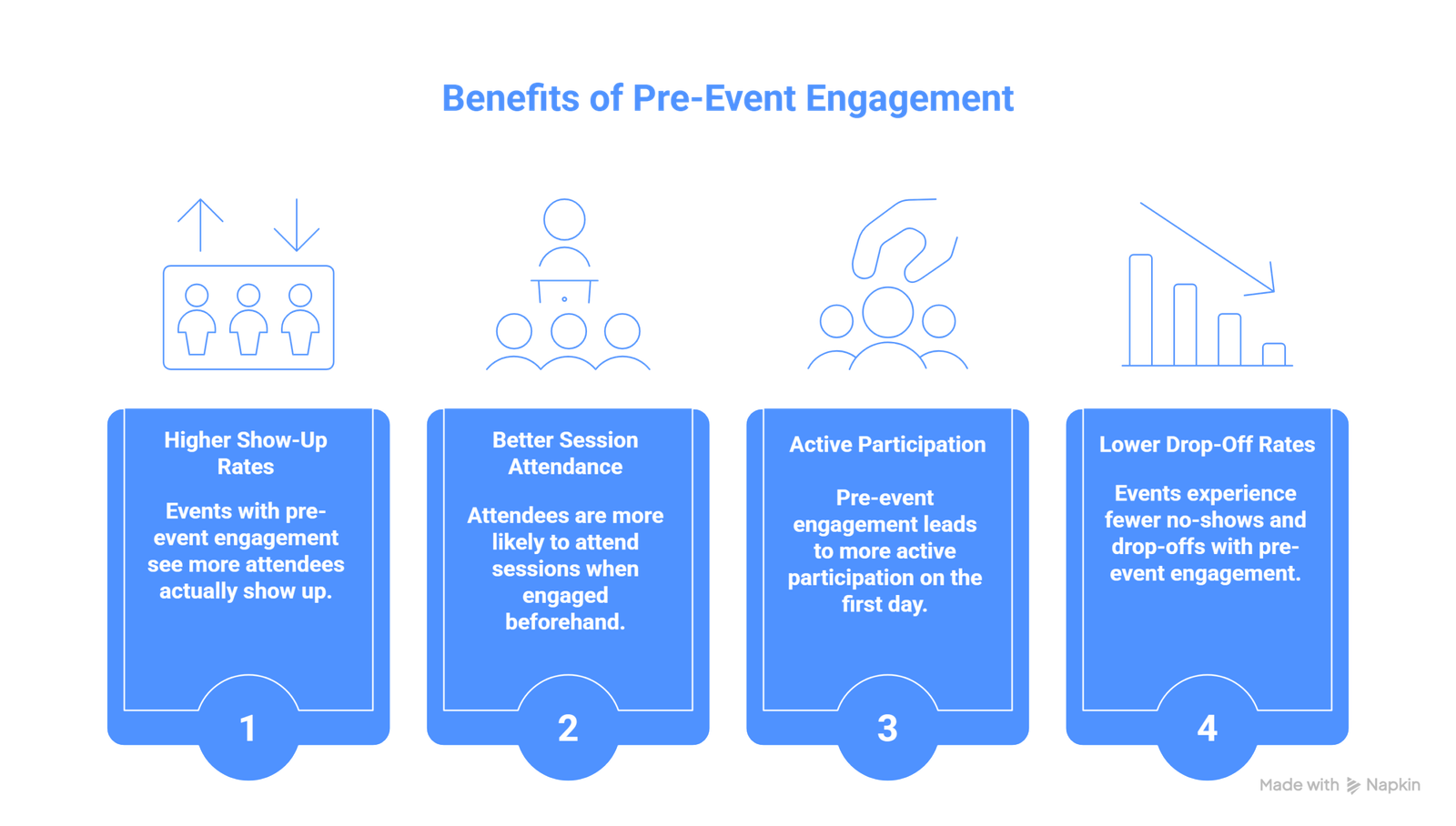
Pre-event engagement refers to all the interactions and touchpoints you create before attendees arrive at the venue or log in virtually. Its goal is simple:
👉 prime attendees to participate, not just attend.
Events that invest in pre-event engagement consistently see:
- Higher show-up rates
- Better session attendance
- More active participation on Day 1
- Lower no-show and drop-off rates
In contrast, events that “go silent” after registration often struggle with disengaged audiences.
Why Pre-Event Engagement Matters More Than Ever
Modern attendees:
- Register weeks in advance
- Compare multiple events
- Decide how much effort to invest before joining
If you don’t stay visible and interactive after registration, attention is lost to other priorities.
Pre-event engagement solves this by:
- Setting expectations
- Creating familiarity with speakers & topics
- Lowering participation anxiety
- Making attendees feel involved early
Registration & Onboarding Optimization
1. Remove Friction from Registration
The registration experience is the first engagement moment.
Best practices:
- Keep forms short (only essential fields)
- Use progress indicators
- Allow social or email autofill
- Clearly communicate next steps after signup
Engagement insight:
Long or confusing forms reduce not just registrations—but future participation intent.
2. Personalized Confirmation & Welcome Flow
After registration, avoid generic “Thanks for registering” emails.
Instead:
- Use the attendee’s name
- Highlight relevant sessions based on role or interest
- Share a simple “What to expect” overview
- Invite them to download the event app or join the community
Example onboarding flow:
- Registration confirmation
- Personalized agenda preview
- Speaker introduction email
- Engagement teaser (poll / question / challenge)
3. Set Engagement Expectations Early
Tell attendees explicitly that participation is encouraged.
Example messaging:
- “Live polls during every session”
- “Ask speakers questions in real time”
- “Win rewards through challenges”
- “Your content may appear on live screens”
When people know participation is expected, they are far more likely to engage.
Content Marketing & Engagement Teasers
1. Speaker Spotlights That Invite Interaction
Instead of just announcing speakers:
- Share one strong insight they’ll discuss
- Ask attendees a question related to the topic
- Invite them to submit questions in advance
Example:
“What’s your biggest challenge with attendee engagement?
Our keynote will answer the top questions live.”
This converts passive readers into active contributors.
2. Agenda Previews with Choice & Control
Let attendees:
- Vote on session topics
- Suggest discussion points
- Bookmark sessions they’re interested in
This creates psychological ownership — people engage more with what they helped shape.
3. Pre-Event Polls & Surveys
Run short polls such as:
- “What are you hoping to learn?”
- “Which sessions are you most excited about?”
- “What challenges are you facing right now?”
Use results to:
- Customize sessions
- Reference audience input during live talks
- Make attendees feel heard before the event begins
Social & Community Led Pre Engagement
1. Create a Shared Event Hashtag
Encourage attendees to:
- Introduce themselves
- Share why they’re attending
- Post expectations or questions
Later, this content can:
- Feed social walls
- Be displayed on event screens
- Be reused during live sessions
2. Early Networking Opportunities
For conferences, expos, and summits:
- Enable attendee profiles
- Allow early connection requests
- Offer topic-based groups or channels
When networking starts early, live engagement increases naturally.
Pre-Event Engagement Checklist (Actionable)
Use this checklist to ensure you’re engagement-ready before Day 1:
✅ Frictionless registration
✅ Personalized onboarding emails
✅ Clear engagement expectations
✅ Speaker & agenda teasers
✅ Pre-event polls or questions
✅ Event app or community access
✅ Social hashtag promotion
Engagement doesn’t start at the opening keynote — it starts at registration.
Events that win attention early dominate participation later.
During-Event Engagement Techniques
Maximizing Real-Time Participation & Interaction (SGE-Optimized)
During-event engagement is the active involvement of attendees while the event is live—whether in-person, virtual, or hybrid. This phase determines whether attendees stay attentive, participate, network, and leave with a positive perception of your event.
An engaged attendee:
- Listens actively
- Responds to prompts
- Asks questions
- Interacts with peers
- Feels seen and acknowledged
A disengaged attendee:
- Multitasks
- Leaves sessions early
- Skips networking
- Forgets most of the content
The difference lies in how intentionally engagement is designed and facilitated.
Interactive Session Formats That Actually Work
1. Live Polls (High-Impact, Low Effort)
Polls are one of the fastest ways to reset attention.
Best practices:
- Use polls every 10–15 minutes (virtual)
- Ask opinion-based questions (no right/wrong)
- Show results instantly on screen
- Let speakers comment on outcomes
Why it works:
Attendees feel involved without pressure, and speakers get real-time feedback.
2. Moderated Live Q&A
Unstructured Q&A often fails due to:
- Fear of speaking publicly
- Time constraints
- Dominant voices
Fix this with:
- Text-based Q&A via event app or platform
- Anonymous question options
- Moderation & upvoting
This results in:
- More questions
- Better-quality discussions
- Higher perceived value
3. Gamification & Challenges
Gamification transforms engagement from “participation” into motivation.
Popular gamified actions:
- Attending sessions
- Asking questions
- Visiting booths
- Posting on social walls
- Completing surveys
Rewards don’t need to be expensive:
- Leaderboard recognition
- Certificates
- Exclusive content
- Small giveaways
4. Breakout Sessions & Small Groups
Especially powerful for:
- Virtual events
- Workshops
- Training programs
Why breakouts work:
- Smaller groups reduce hesitation
- Conversations feel safer
- Networking becomes meaningful
Use clear prompts:
- “Discuss one challenge you’re facing”
- “Share one takeaway”
- “Vote on the best idea”
Attendee Engagement Tools that Actually Help
1. Event Apps & Engagement Platforms
A strong event app should enable:
- Polls & Q&A
- Session feedback
- Attendee networking
- Live announcements
- Gamification
Key insight:
Apps should support the experience — not overwhelm it. Fewer, well-used features outperform bloated tools.
2. Social Walls & Live Content Displays
Social media walls are one of the most used audience engagement tools that displayd live attendee content on screens:
- Increases participation instantly
- Encourages social sharing
- Creates FOMO for non-participants
- Makes attendees feel recognized
Use social walls for:
- Hashtag posts
- Photo uploads
- Poll results
- Announcements
- Leaderboards
This works exceptionally well in:
- Conferences
- Expos
- Product launches
- Corporate town halls
3. Real-Time Announcements & Prompts
Use on-screen prompts like:
- “Vote now”
- “Ask your question”
- “Post with #EventName”
- “Next session starting in 5 minutes”
These micro nudges dramatically improve participation.
Attendee Engagement Tactics by Event Format
In-Person Events Attendee Engagements
- Live screens with polls & social content
- QR-based interactions
- Gamified booth visits
- On-stage audience prompts
Virtual Event Attendee Engagement
- Frequent polls (every 5–10 minutes)
- Chat & emoji reactions
- Breakout rooms
- Shorter session formats
Hybrid Event Attendee Engagement
- Equal interaction options for remote attendees
- Unified engagement tools
- Shared leaderboards & social feeds
- Dedicated hybrid moderators
Common During-Event Attendee Engagement Mistakes
🚫 Asking for engagement once, not repeatedly
🚫 Overloading attendees with tools
🚫 Ignoring poll or Q&A responses
🚫 Letting sessions run too long
🚫 Treating virtual attendees as secondary
Rule of thumb:
If engagement isn’t acknowledged, it will stop.
During-Event Attendee Engagement Quick Checklist
✅ Polls planned into sessions
✅ Moderated Q&A enabled
✅ Social wall or live display active
✅ Gamification rules explained
✅ Clear CTAs shown on screens
✅ Moderator assigned for engagement
Engagement during an event must be continuous, visible, and rewarded.
If attendees don’t see interaction happening, they won’t join in.
Post-Event Engagement & Analysis
Measuring Success & Maintaining Momentum (SGE-Ready)
Post-event engagement is the process of analyzing attendee interactions, collecting feedback, and continuing conversations after the event ends. While many teams stop at “thank you for attending,” high-performing events treat post-event engagement as a growth engine.
This phase determines:
- Whether attendees return
- How sponsors judge value
- What you improve next time
- How strong your event brand becomes
Why Post-Event Engagement Is a Competitive Advantage
Most events lose momentum within 48 hours of ending.
That’s exactly when attention is still high and memories are fresh.
Effective post-event engagement:
- Extends event lifespan
- Converts engagement into insights
- Strengthens relationships
- Reduces marketing costs for future editions
Engagement Measurement & Analytics Framework
Step 1: Consolidate Engagement Data
Pull data from:
- Event app or platform
- Polling & Q&A tools
- Social walls / UGC submissions
- Session attendance logs
- Networking interactions
Create a single engagement dashboard instead of scattered reports.
Step 2: Core Engagement KPIs to Track
Quantitative Metrics
- Average sessions attended per user
- Poll participation rate
- Questions per session
- Social posts per attendee
- Networking connections made
Qualitative Metrics
- Session ratings
- Open-ended feedback
- Speaker feedback
- Sentiment analysis (positive / neutral / negative)
Step 3: Engagement Scoring Model (Advanced)
Assign weights to actions:
- Attended session = 1 point
- Asked a question = 3 points
- Posted content = 4 points
- Networked = 5 points
This helps you:
- Identify super-engaged attendees
- Spot disengaged segments
- Personalize follow-ups
Calculating Engagement ROI
Engagement directly influences revenue outcomes.
Engagement → Business Impact Mapping
| Engagement Signal | Business Impact |
|---|---|
| High session attendance | Content relevance validated |
| Active sponsor booth visits | Sponsor ROI |
| Social sharing | Organic reach |
| Survey participation | Strong brand trust |
| Repeat registrations | Long-term growth |
Use engagement data to justify:
- Sponsorship pricing
- Event format changes
- Technology investments
Post-Event Surveys That Actually Get Responses
Why Most Surveys Fail
- Too long
- Too generic
- Sent too late
- No visible outcome
High-Response Survey Best Practices
Timing:
Send within 24–48 hours of event completion.
Length:
5–8 questions max.
Structure:
- Overall event rating
- Best session or moment
- Engagement experience rating
- One improvement question
- Optional open feedback
Pro tip:
Tell attendees how their feedback will be used.
Turning Engagement into Community
1. Share Engagement Highlights
Send a recap including:
- Top poll results
- Most asked questions
- Best social posts
- Key takeaways
This reinforces participation value.
2. Repurpose Event Content
Turn sessions into:
- Blog posts
- Short video clips
- Slide decks
- Email content
Tag speakers and attendees where possible to reignite engagement.
3. Segment Follow-Ups Based on Engagement
Examples:
- Highly engaged → early-bird offers, ambassador programs
- Moderately engaged → content summaries, replays
- Low engagement → short highlight reel + re-invite
Personalization dramatically improves retention.
4. Keep the Conversation Open
Use:
- LinkedIn groups
- Email series
- Event community platforms
- Monthly updates
The goal is to shift from event-based engagement to always-on engagement.
Post-Event Engagement Checklist
✅ Engagement data consolidated
✅ KPIs analyzed
✅ ROI insights documented
✅ Survey sent within 48 hours
✅ Highlights shared
✅ Follow-ups personalized
✅ Community touchpoint created
Events don’t end when the stage lights go off — they end when engagement stops.
The longer you sustain interaction, the stronger your event brand becomes.
The Attendee Engagement Lifecycle
High-performing events follow a full engagement loop:
1️⃣ Pre-event: Build anticipation
2️⃣ During-event: Enable interaction
3️⃣ Post-event: Measure, learn, continue
When all three work together, you don’t just host events —
👉 you build experiences people want to return to.
Frequently Asked Questions (FAQs)
What is attendee engagement?
Attendee engagement is the level of active participation, interaction, and emotional involvement an attendee has with an event. It is measured through actions such as session attendance, live polls, Q&A participation, networking activity, content sharing, and post-event feedback.
Why AI likes this answer:
Clear definition + measurable behaviors = high citability.
Why is attendee engagement important for events?
Attendee engagement is important because it directly impacts:
- Event ROI
- Attendee satisfaction
- Sponsor value
- Brand recall
- Repeat attendance
Highly engaged attendees are more likely to stay longer, interact with sponsors, share content, and return for future events.
What are the best attendee engagement strategies?
The most effective attendee engagement strategies include:
- Pre-event polls and content teasers
- Interactive sessions with live polls and Q&A
- Gamification and rewards
- Structured networking opportunities
- Social walls displaying live attendee content
- Personalized post-event follow-ups
The best results come from combining multiple strategies across the event lifecycle.
How do you measure attendee engagement at events?
Attendee engagement is measured using a mix of quantitative and qualitative metrics, including:
- Session attendance rates
- Poll and Q&A participation
- Networking interactions
- Social media or UGC activity
- Post-event survey responses
- Net Promoter Score (NPS)
Advanced teams also use engagement scoring models to evaluate attendee value.
What is the difference between attendee engagement and attendee satisfaction?
- Attendee engagement measures behavior (what people do during the event).
- Attendee satisfaction measures perception (how people feel about the event afterward).
High engagement often leads to high satisfaction, but satisfaction alone does not guarantee engagement.
How can you improve engagement in virtual events?
To improve virtual attendee engagement:
- Use polls every 5–10 minutes
- Enable moderated chat and Q&A
- Break long sessions into shorter segments
- Use breakout rooms for discussions
- Add gamification and leaderboards
- Acknowledge audience input live
Virtual events require more frequent interaction prompts than in-person events.
What tools help increase attendee engagement?
Common attendee engagement tools include:
- Event apps
- Audience response systems
- Live polling & Q&A platforms
- Social walls and live displays
- Gamification engines
- Networking and matchmaking tools
The key is not the number of tools, but how well they’re integrated into sessions.
When should attendee engagement start and end?
Attendee engagement should:
- Start: At registration (pre-event onboarding)
- Peak: During live sessions
- Continue: After the event through follow-ups and community building
Events that treat engagement as a continuous process outperform one-off experiences.