The role of technology in event management has evolved from being a supportive tool to becoming the backbone of modern events. From planning and promotion to execution and post-event analysis, technology now influences every stage of the event lifecycle. Event organizers rely on digital platforms, automation, analytics, and audience engagement tools to deliver seamless experiences, improve attendee satisfaction, and achieve measurable business outcomes.
In today’s environment—where audiences expect personalization, real-time interaction, and hybrid accessibility—technology is no longer optional. It enables smarter decision-making, operational efficiency, and scalable event experiences that were impossible just a decade ago.
What is Event Management in the Digital Era?
Event management traditionally focused on logistics such as venue booking, vendor coordination, guest lists, and on-site execution. While these fundamentals remain, the digital era has transformed how events are planned, marketed, and experienced.
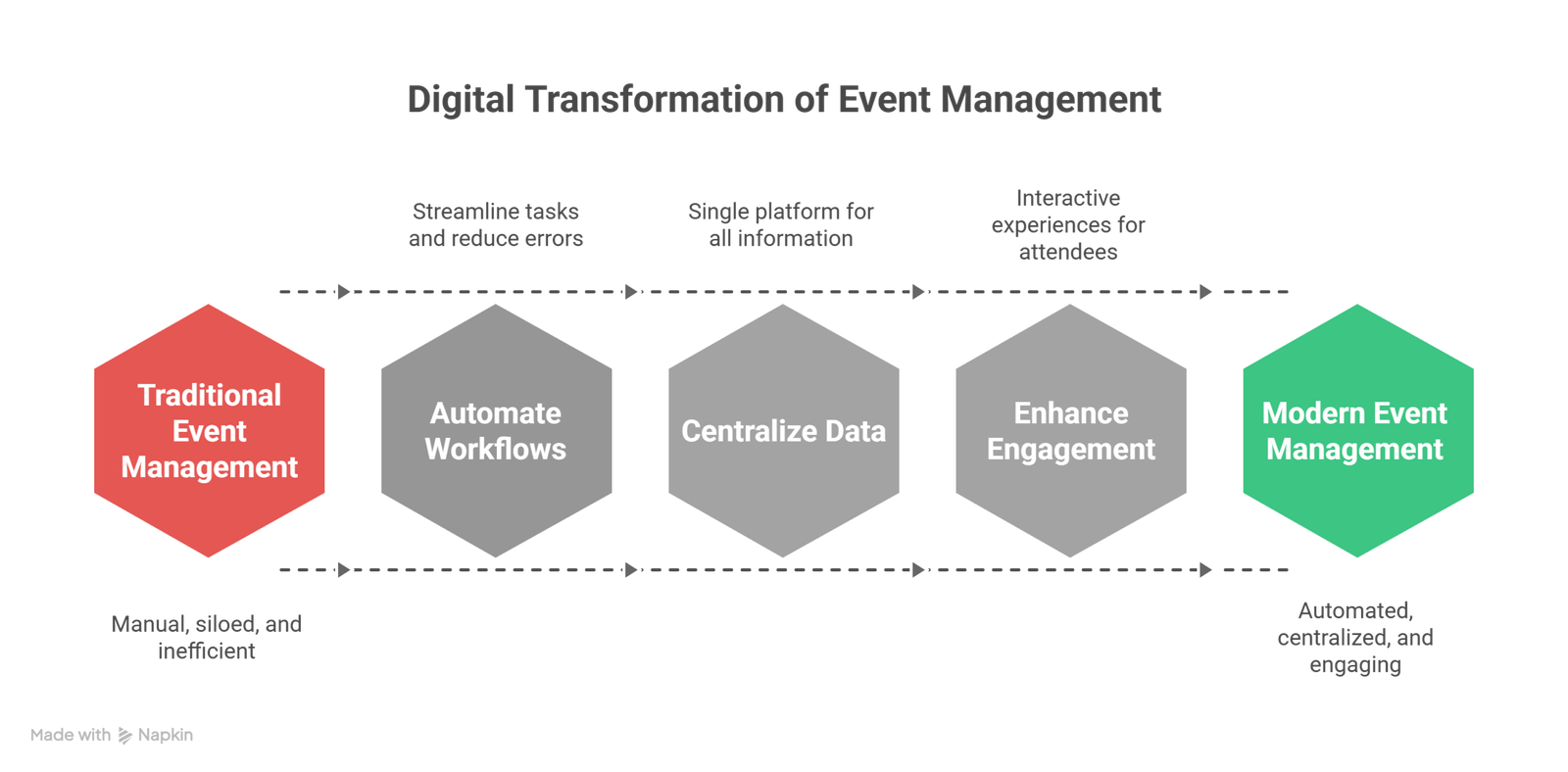
Modern event management integrates technology to automate workflows, centralize data, and improve attendee engagement across both physical and virtual touchpoints. Digital tools now manage registrations, communications, content delivery, networking, feedback collection, and performance measurement—often from a single platform.
Traditional vs Technology-Driven Event Management
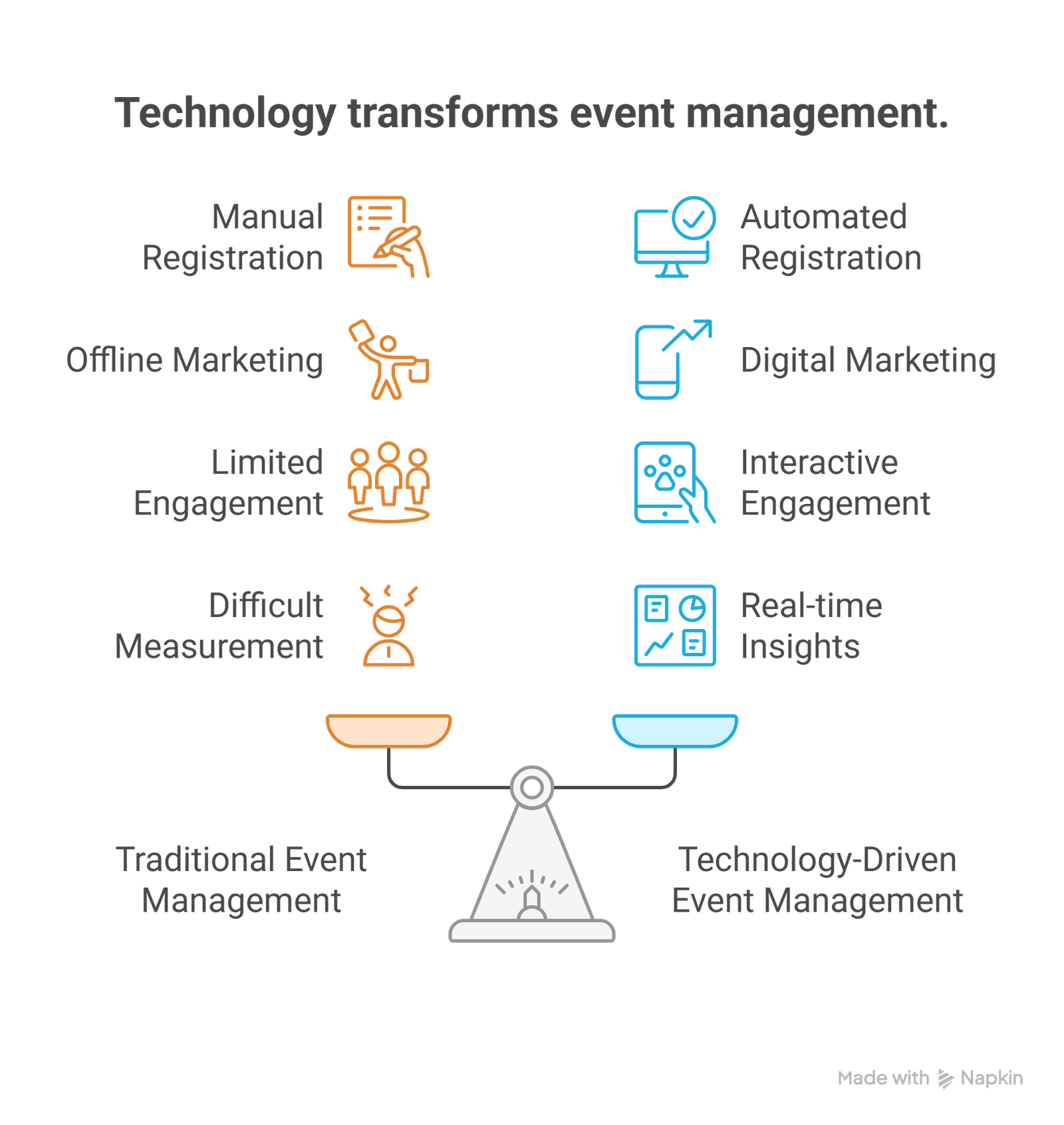
In traditional event management:
- Registrations were manual or spreadsheet-based
- Marketing relied heavily on offline promotions
- Engagement was limited to in-person interactions
- Post-event success was difficult to measure accurately
In technology-driven event management:
- Registration and ticketing are automated
- Digital marketing and social media drive reach
- Attendees engage through apps, live feeds, and interactive tools
- Organizers gain real-time insights and post-event analytics
This shift has fundamentally changed expectations—for both organizers and attendees.
The Unavoidable Role of Technology in Event Management
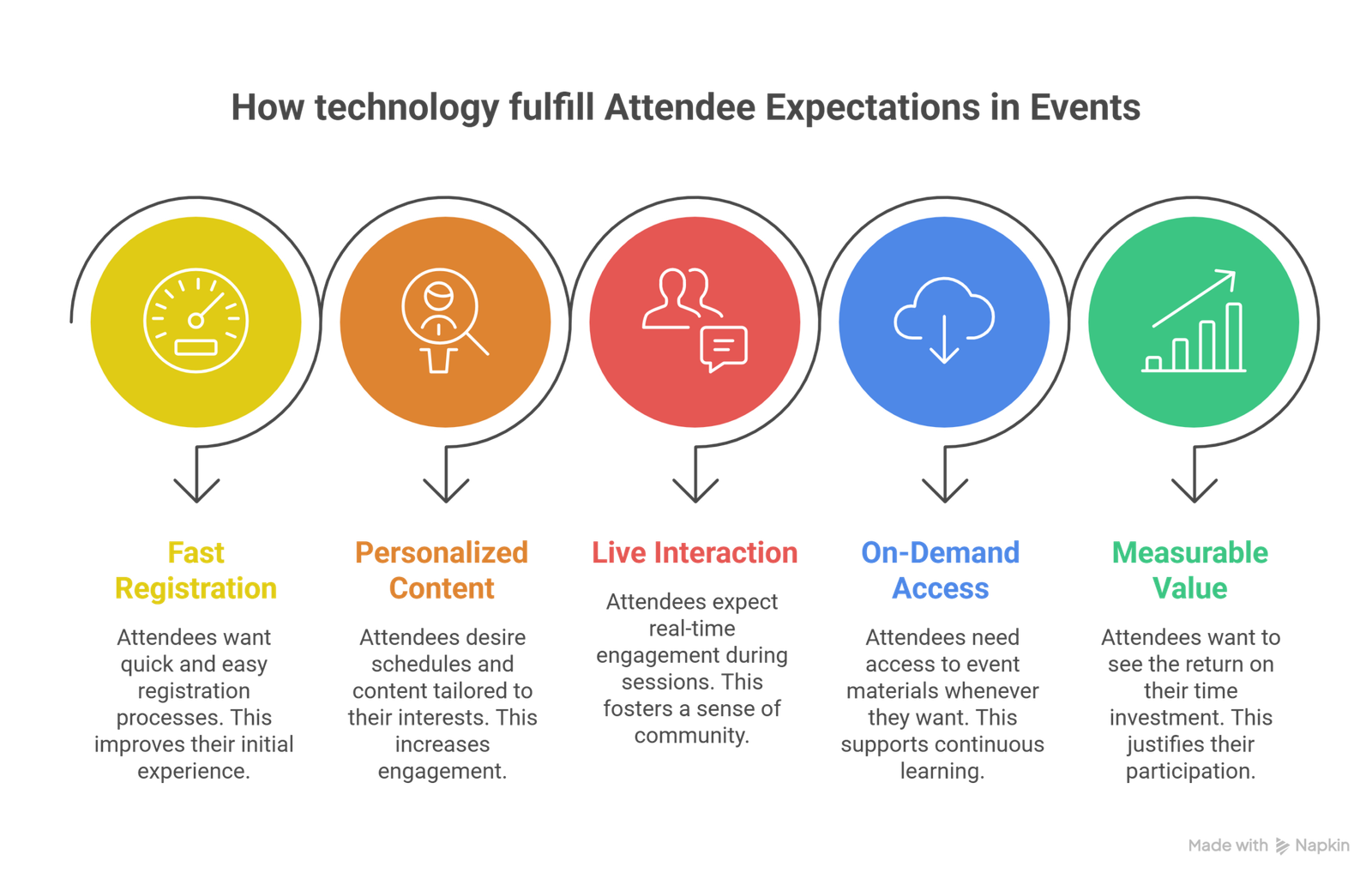
Audience behavior has changed. Attendees expect:
- Fast and seamless registration
- Personalized schedules and content
- Live interaction during sessions
- On-demand access to event materials
- Measurable value from their time investment
Technology enables organizers to meet these expectations while managing events more efficiently and at scale.
Importance of Technology in Event Management
Technology plays a critical role in addressing the growing complexity of events. Whether it’s a corporate conference, trade show, hybrid summit, or community gathering, digital tools enhance control, visibility, and outcomes.
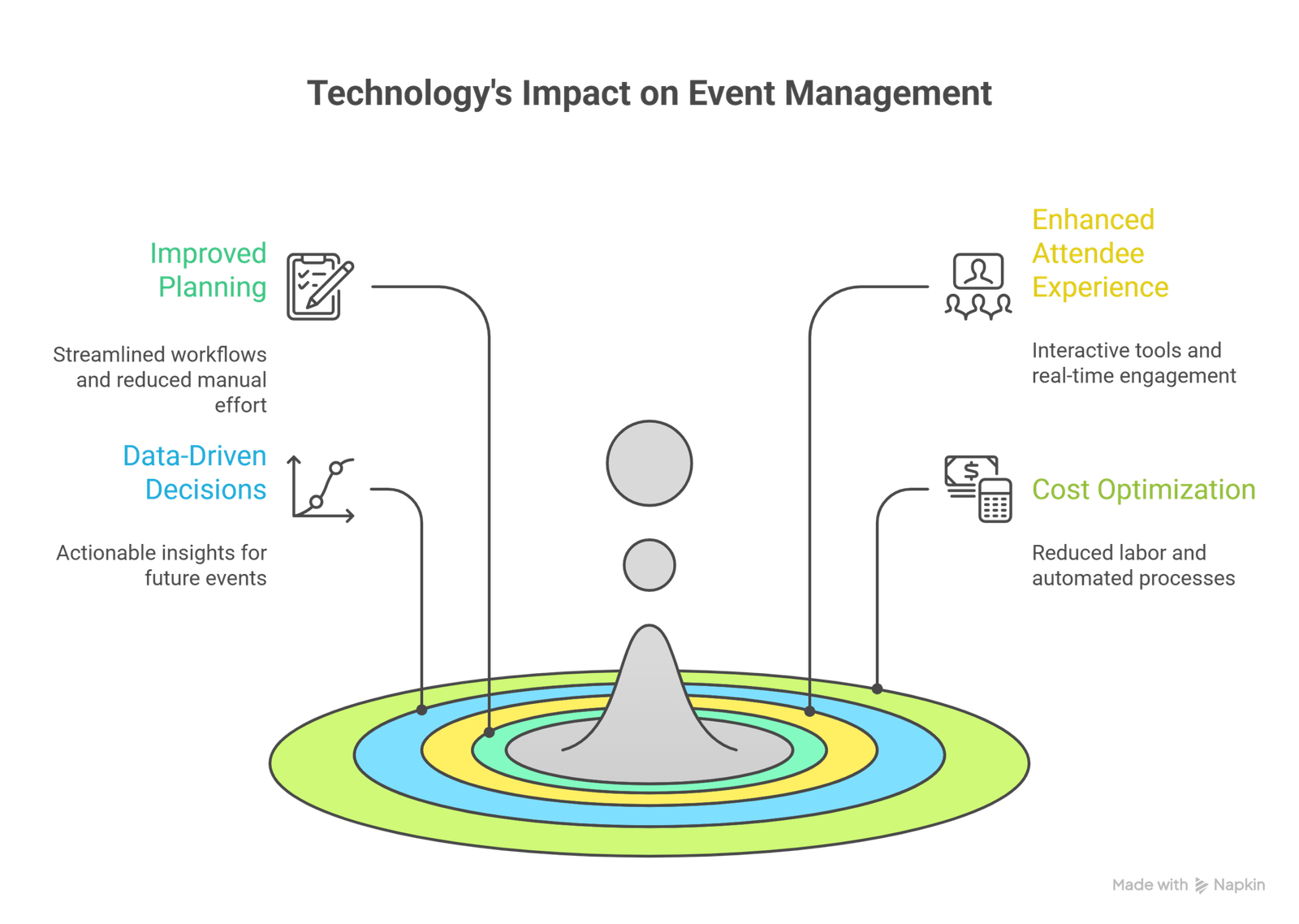
Improved Planning and Operational Efficiency
Event management software allows organizers to:
- Centralize event data and workflows
- Automate repetitive tasks such as confirmations and reminders
- Coordinate teams, vendors, and schedules in real time
This reduces manual effort, minimizes errors, and allows planners to focus on strategy rather than administration.
Enhanced Attendee Experience and Engagement
Technology enables richer, more interactive experiences through:
- Mobile event apps with schedules and notifications
- Live polls, Q&A sessions, and audience participation tools
- Social media displays that showcase real-time attendee content
Engaged attendees are more likely to stay longer, participate actively, and view the event positively.
Data-Driven Decision Making and Analytics
One of the biggest advantages of technology in event management is access to actionable data. Organizers can track:
- Registration and attendance trends
- Session popularity and engagement levels
- Audience behavior before, during, and after the event
These insights help improve future events and demonstrate clear return on investment (ROI).
Cost Optimization and Resource Management
By automating processes and reducing reliance on manual labor, technology helps control costs. Digital ticketing, virtual components, and automated communication reduce printing, staffing, and logistical expenses while improving accuracy and scalability.
Key Technologies Used in Event Management
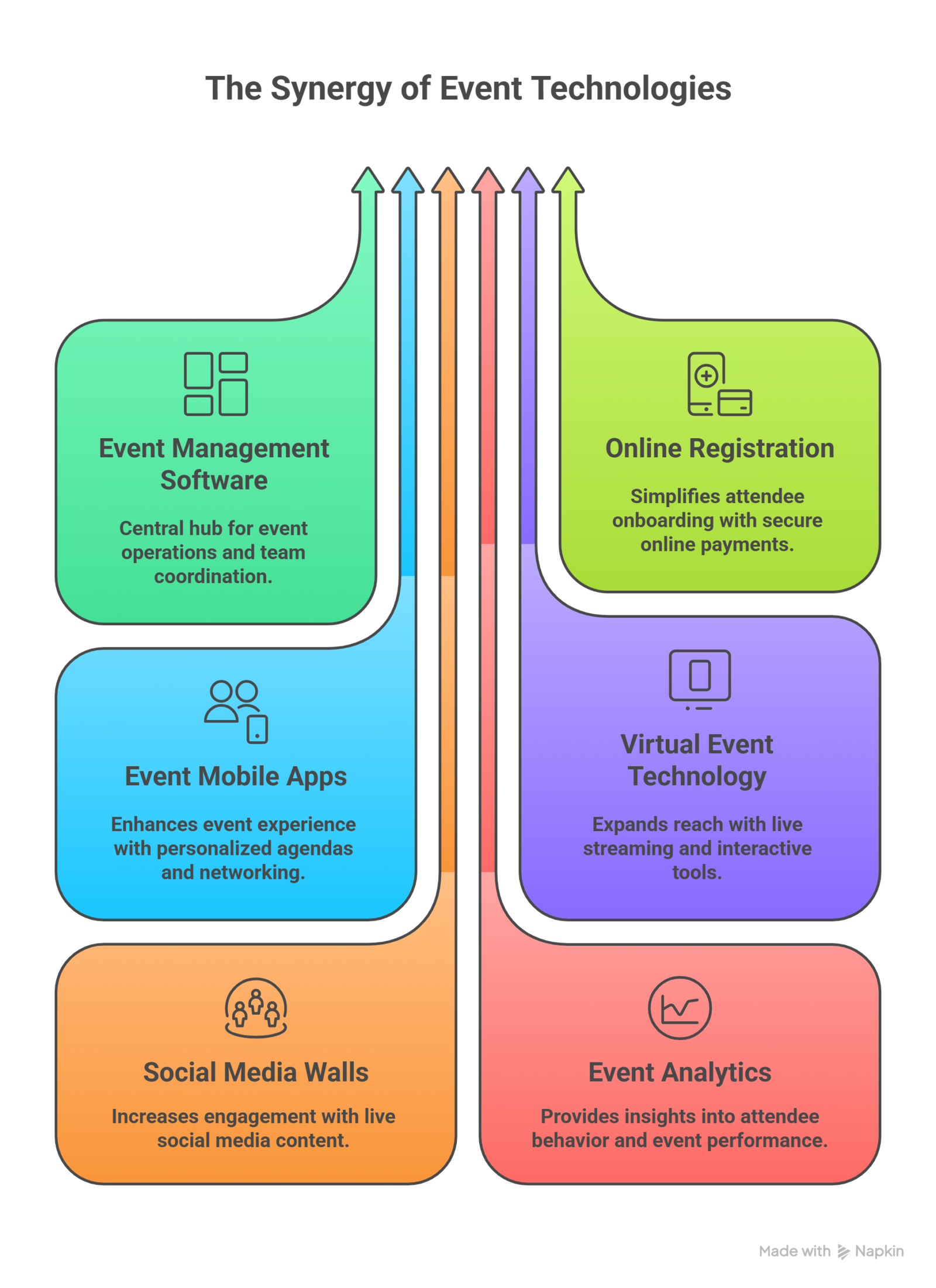
Modern events rely on a combination of platforms and tools, each serving a specific purpose within the event ecosystem.
Event Management Software and Platforms
These platforms act as the central hub for event operations. They typically include:
- Event creation and scheduling
- Registration and attendee management
- Email communication and notifications
- Reporting and analytics
Using a unified platform ensures consistency and better coordination across teams.
Online Registration and Ticketing Systems
Digital registration systems simplify the attendee onboarding process. Features include:
- Custom registration forms
- Secure online payments
- Automated confirmations and reminders
- Real-time attendee tracking
These systems reduce friction for attendees and provide organizers with accurate, up-to-date data.
Event Mobile Apps
Event apps enhance the on-site and virtual experience by offering:
- Personalized agendas
- Speaker and session information
- Push notifications for updates
- Networking and messaging features
Apps also reduce dependency on printed materials and improve sustainability.
Virtual and Hybrid Event Technology
Virtual and hybrid events have become mainstream. Supporting technology includes:
- Live streaming and video conferencing tools
- Virtual exhibitor booths
- Interactive chat, polls, and breakout rooms
- Virtual event engagement tools
These technologies expand reach, increase accessibility, and allow global participation.
Social Media Walls and Audience Engagement Tools
Social media walls aggregate live content from platforms such as Instagram, X, LinkedIn, or event-specific hashtags and display it on screens or digital platforms. They:
- Encourage user-generated content
- Increase real-time engagement
- Build social proof and brand visibility
When combined with moderation and other audience engagement tools, they become powerful engagement drivers.
Event Analytics and Feedback Tools
Analytics tools provide insights into attendee behavior and event performance. Common capabilities include:
- Attendance tracking
- Session engagement analysis
- Feedback surveys and sentiment analysis
These tools help quantify success and identify improvement areas.
On-Site Event Technology
On-site technologies improve operational flow and attendee convenience:
- QR-based or RFID check-ins
- Digital badges and access control
- Wayfinding screens and interactive kiosks
They reduce wait times and create a smoother event experience.
Role of Technology in Event Management Stages
Technology supports event management at every stage, from concept to conclusion.
Pre-Event Planning and Promotions
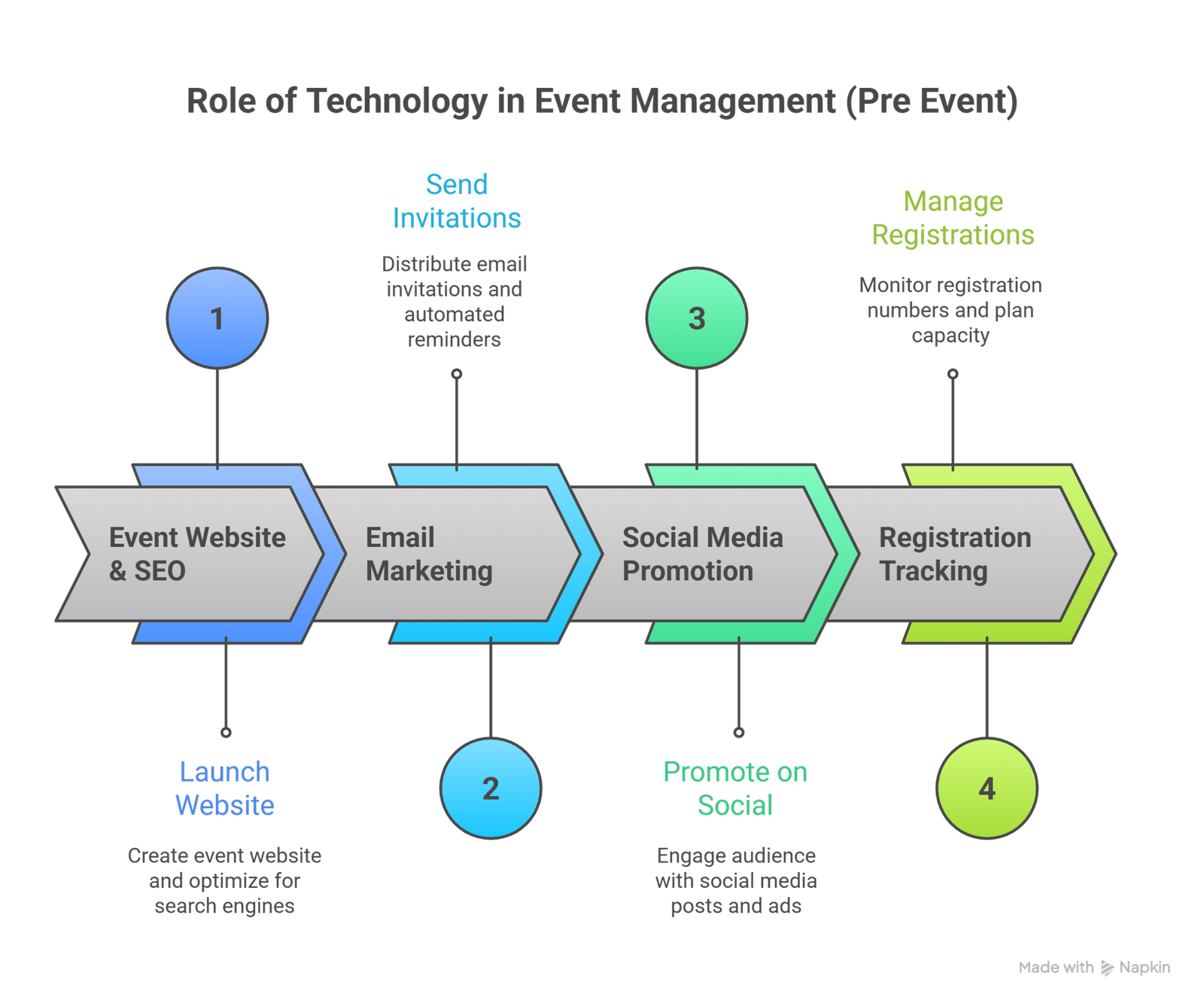
Before the event, technology helps with:
- Event website creation and SEO optimization
- Email marketing and automated campaigns
- Social media promotion and paid advertising
- Registration tracking and capacity planning
This stage sets the foundation for attendance and engagement.
During the Event – Real-Time Execution and Engagement
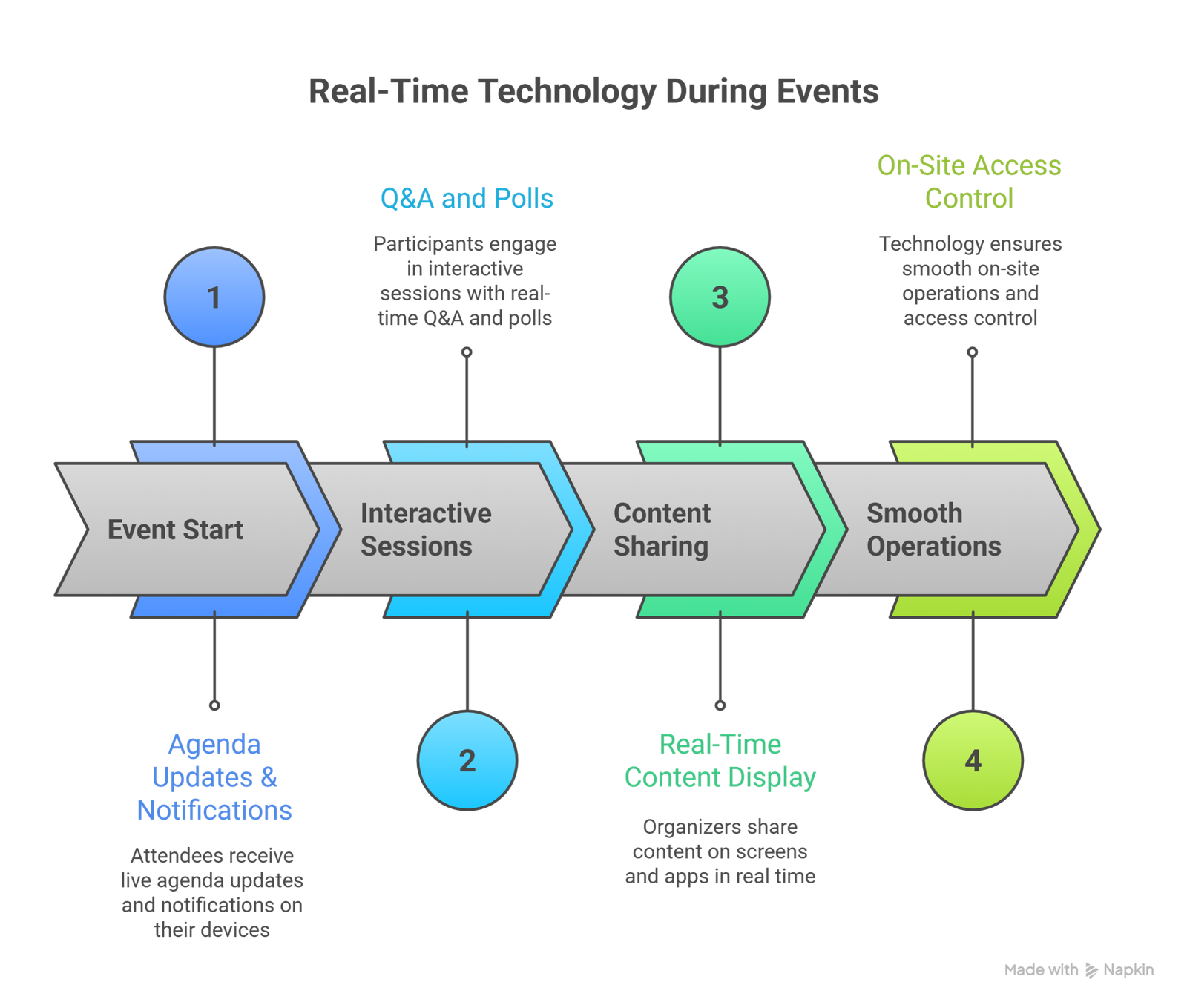
During the event, technology enables:
- Live agenda updates and notifications
- Interactive sessions with Q&A and polls
- Real-time content sharing on screens and apps
- Smooth on-site operations and access control
Real-time tools allow organizers to adapt quickly and enhance attendee satisfaction.
Post-Event Analysis and ROI Measurement
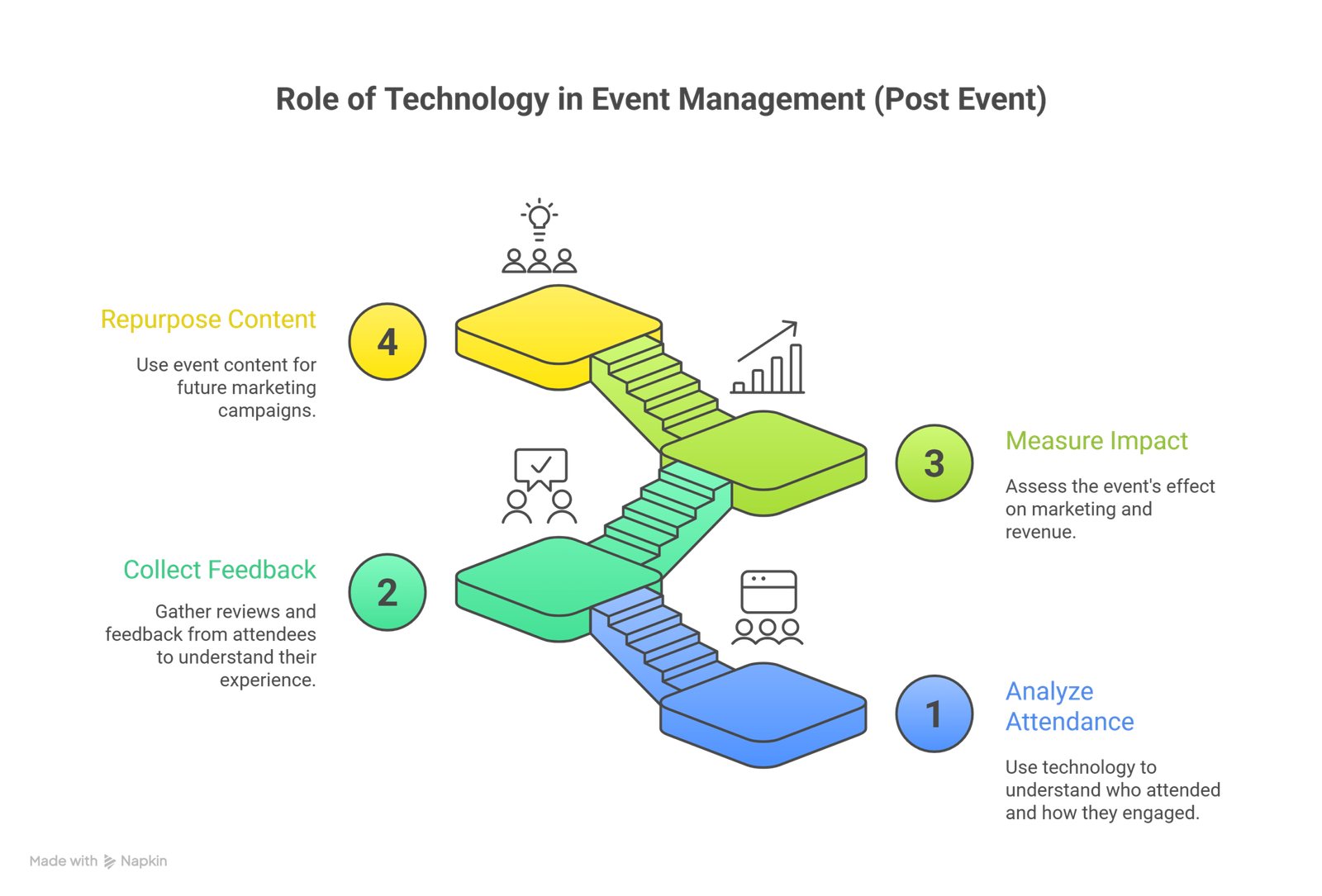
After the event, technology helps:
- Analyze attendance and engagement data
- Collect feedback and reviews
- Measure marketing and revenue impact
- Repurpose content for future campaigns
This data-driven approach ensures continuous improvement.
Emerging Event Technology Trends (2025 and Beyond)
Event technology is evolving rapidly, driven by changing attendee expectations, hybrid work culture, and advances in AI and immersive experiences. Understanding these trends helps organizers future-proof their events.
Artificial Intelligence (AI) and Automation in Event Management
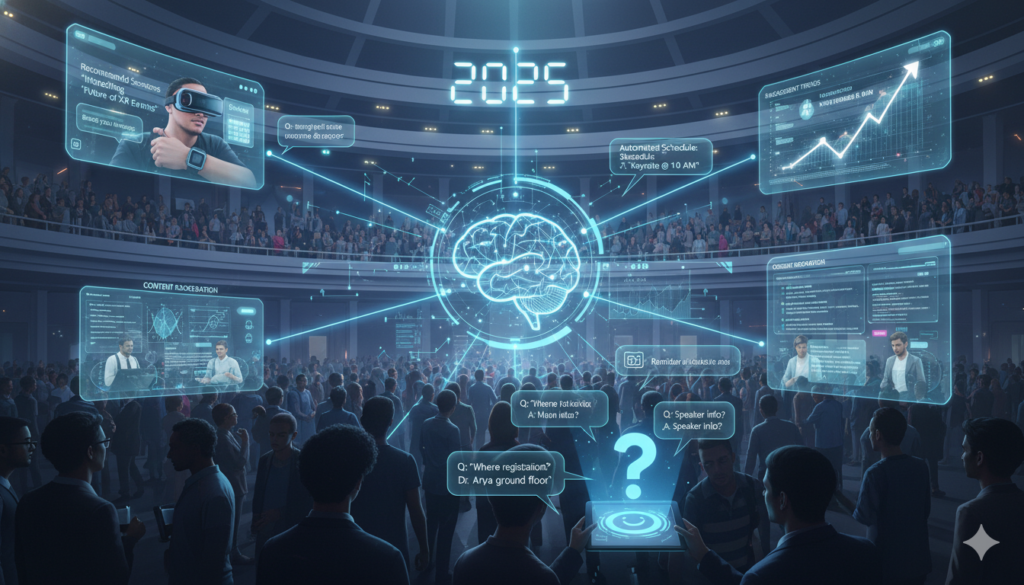
AI is transforming how events are planned, personalized, and optimized. In 2025, AI is being used to:
- Recommend sessions based on attendee interests
- Automate scheduling, reminders, and follow-ups
- Analyze attendee behavior and predict engagement trends
- Moderate content and manage user-generated submissions
AI-powered chatbots are also improving attendee support by answering questions instantly before and during events.
Augmented Reality (AR) and Virtual Reality (VR)

AR and VR technologies are creating immersive experiences that go beyond traditional event formats. Their applications include:
- Virtual venue walkthroughs before the event
- Interactive product demos at exhibitions
- Immersive training sessions and simulations
- Enhanced networking through virtual environments
These technologies are especially valuable for global and hybrid events where physical presence is limited.
Personalization Through Data and Technology
Modern attendees expect events to be tailored to their interests. Technology enables personalization through:
- Customized agendas and session recommendations
- Targeted notifications and content delivery
- Personalized networking suggestions
- Dynamic content based on attendee behavior
Personalization increases engagement, satisfaction, and overall event value.
Sustainability and Green Event Technology
Sustainability is becoming a priority in event planning. Technology supports eco-friendly events by:
- Reducing paper usage through digital tickets and apps
- Enabling virtual attendance to cut travel emissions
- Optimizing resource allocation using data insights
- Supporting carbon tracking and sustainability reporting
Tech-driven sustainability initiatives also improve brand perception and align with global environmental goals.
Benefits of Using Technology in Event Management
When implemented strategically, technology delivers measurable benefits across all event types.
Higher Engagement and Participation
Interactive audience engagement tools such as live polls, Q&A sessions, social media displays, and gamification keep attendee engagement high. Engaged audiences are more likely to:
- Participate in sessions
- Share content on social media
- Provide feedback and return for future events
Better Scalability for Large and Global Events
Technology allows events to scale without proportionally increasing complexity. Organizers can:
- Manage thousands of attendees efficiently
- Host hybrid or virtual events with global reach
- Repurpose content for extended engagement
This scalability opens new revenue and growth opportunities.
Improved Communication and Networking
Event platforms and apps facilitate seamless communication through:
- Push notifications and announcements
- Direct messaging and meeting scheduling
- Community forums and discussion boards
These tools foster meaningful connections among attendees, speakers, sponsors, Event Profs and exhibitors.
Stronger Brand Visibility and Recall
Digital engagement tools, branded content, and social sharing amplify brand presence before, during, and after the event. Technology helps turn events into long-lasting marketing assets rather than one-time experiences.
Expert Insights and Real-World Applications (EEAT Section)
How Event Professionals Use Technology to Drive Success
Experienced event professionals agree that technology is no longer just a support function—it is a strategic driver of success. Organizers who invest in the right tools gain better control, visibility, and measurable outcomes.
Key insights from industry experience:
- Events with integrated engagement tools consistently see higher attendee satisfaction
- Data-backed planning leads to better session design and content relevance
- Real-time feedback enables immediate improvements during live events
Case Study: Technology-Driven Event Engagement
Consider a mid-sized professional conference that integrated event apps, live engagement tools, and analytics dashboards. By doing so, the organizers:
- Increased session participation through live polls and Q&A
- Improved networking using in-app matchmaking
- Measured attendee satisfaction in real time
Post-event analysis revealed higher engagement rates and improved sponsor ROI, validating the investment in technology.
First-Hand Lessons from Technology-Enabled Events
Event planners who adopt technology early often highlight the same lesson: tools are only effective when aligned with clear goals. Successful implementation requires:
- Choosing technology that matches event objectives
- Training teams and speakers effectively
- Focusing on user experience, not just features
This practical experience reinforces trust and credibility.
Frequently Asked Questions (FAQs)
What is the role of technology in event management?
The role of technology in event management is to streamline planning, enhance attendee engagement, and provide measurable insights. It supports automation, communication, personalization, and performance tracking across the event lifecycle.
How does technology improve event planning?
Technology improves event planning by centralizing workflows, automating repetitive tasks, and providing real-time data. This allows organizers to make informed decisions and reduce operational errors.
What technologies are commonly used in event management?
Common technologies include event management software, online registration systems, mobile event apps, virtual and hybrid platforms, social engagement tools, and analytics solutions.
How does technology enhance attendee engagement?
Technology enhances engagement through interactive features such as live polls, Q&A sessions, networking tools, and real-time content displays. These features encourage participation and improve attendee satisfaction.
What are the latest trends in event management technology?
Key trends include AI-driven personalization, virtual and hybrid events, immersive AR/VR experiences, sustainability-focused tools, and advanced analytics for ROI measurement.
Can technology help measure event success and ROI?
Yes. Event technology provides detailed analytics on attendance, engagement, feedback, and conversions, enabling organizers to evaluate performance and justify investment.
Final Call to Action
Technology is redefining what successful events look like. From smarter planning to deeper engagement and measurable ROI, the right tools can transform your event strategy.
Ready to elevate your events with technology?
Explore modern event solutions, engagement tools, and real-world use cases to create impactful, future-ready events that deliver real results.